

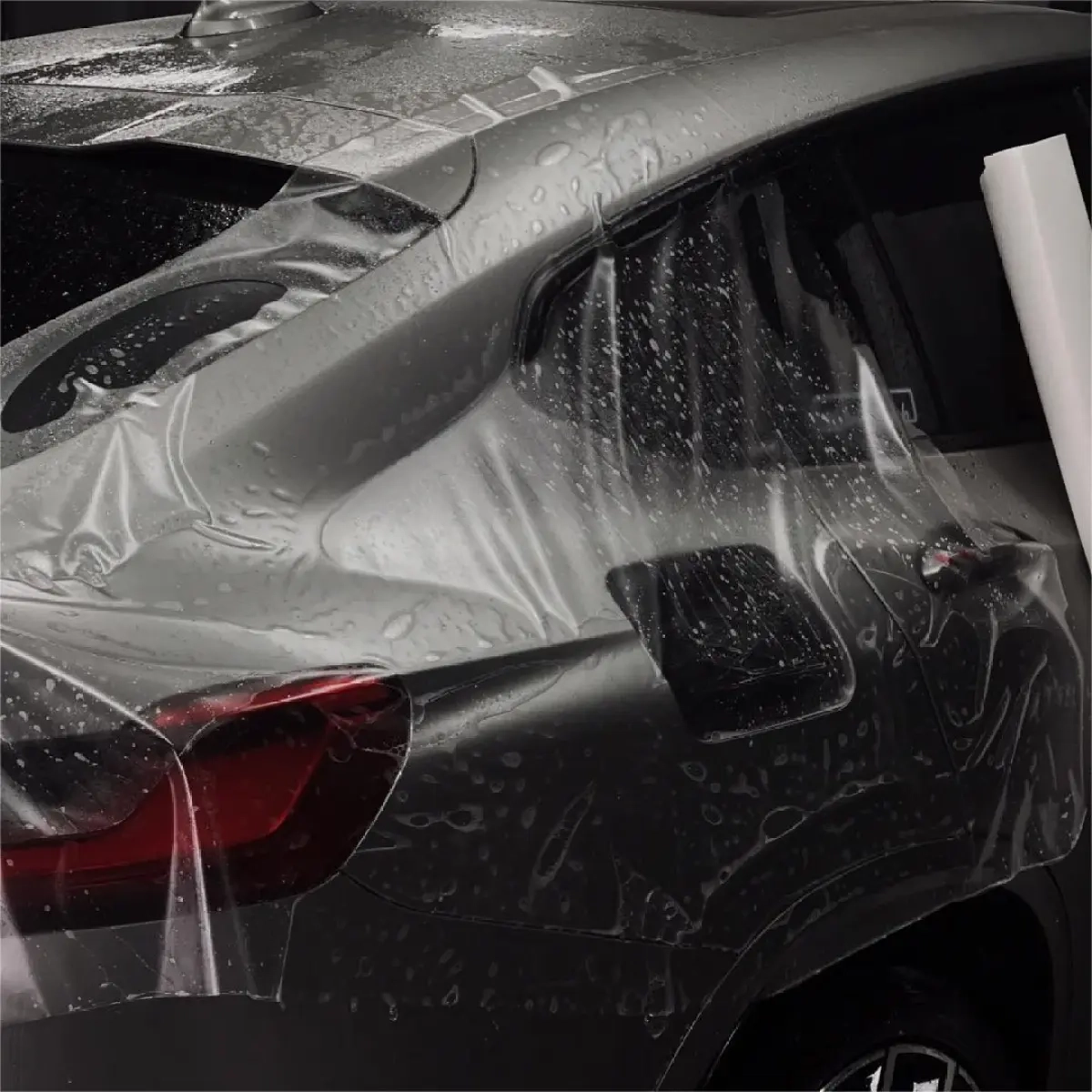
Typing ppf near me is only the first step. The best result is a shop that can prove film performance with real data, installs cleanly with the right process, and stands behind the work. Use this five-question checklist to qualify local installers before you book.
Related resources on ALUKO: car wrap · ppf wrap · clear ppf · colored ppf
Q1 — What film is being installed, and where’s the data sheet?
Ask to see a current technical data sheet (TDS) for the exact film and thickness you’ll get. Premium aliphatic TPU PPF typically measures ~7–8 mil without liner and uses a self-healing clear coat. For example, an industry TDS lists a nominal thickness of 7.6 mil, tensile strength >15 MPa, and >300% elongation, plus color stability of ΔE < 1.5 after xenon-arc weathering. These are the kinds of numbers you want the shop to show you, in writing, for the exact film on your car.
Tip: If a shop can’t provide a TDS or lists specs that don’t match the film box labels, consider that a red flag.
Q2 — Which durability tests back the film?
Quality films are validated with standardized tests, not just marketing claims. Look for:
- UV/weathering: ISO 4892-2 xenon-arc exposure to simulate sun, heat, and moisture. Ask for ΔE (color change) and gloss retention values after exposure.
- Abrasion resistance: Taber abrasion per ASTM D1044/D4060 to quantify haze or weight loss. This helps predict how the top coat will resist micro-marring from washing.
- Impact/stone chip: Look for SAE J400/ASTM D3170 style gravelometer results.
Q3 — Who is installing it, and what pattern/cutting system do they use?
Precision patterns and training reduce risk. Many top shops use digital pattern libraries (e.g., “DAP” style databases) and keep blades off paint. Ask whether panels are wrapped and tucked when feasible, how edges are sealed, and whether the team is brand-certified. Certification often correlates with better outcomes and warranty support. Major brands back certified work with 10-year film warranties against yellowing, bubbling, and cracking, which is what you should expect.
Q4 — What’s the shop’s surface prep and install process?
Most installation defects are caused by poor preparation. A robust process includes decontamination (wash, clay), a final wipe with ~70% isopropyl alcohol on edges and complex curves, slip/tack solution control, and post-heat/edge inspection. Ask the shop to walk you through their steps and what QC checklist they use before releasing the vehicle. :contentReference[oaicite:5]{index=5}
Q5 — How is the job warranted and maintained locally?
Good installers pair the film maker’s warranty with their own workmanship coverage (e.g., 12–24 months). Verify exactly what’s covered, the claim process, and whether you’ll get a digital warranty registration. Leading film programs advertise 10-year material coverage for gloss and matte series.
Measured Benchmarks You Can Request
When you visit a shop you found via “ppf near me,” bring these numbers so discussions stay objective:
- Construction: TPU base + elastomeric top coat; ~7–8 mil total (no liner).
- Mechanical: >15 MPa tensile strength; >300% elongation (ease of single-piece hood/bumper installs). :contentReference[oaicite:8]{index=8}
- Color Stability: Xenon-arc weathering with ΔE < 1.5 and high gloss retention (or matte uniformity). :contentReference[oaicite:9]{index=9}
- Abrasion: Taber abrasion test results (report the wheels/load and haze increase).
- Impact: Gravelometer (SAE J400/ASTM D3170) “no detrimental effect” outcomes.
When to Choose Clear vs. Colored PPF
If you want invisible protection that preserves factory color and finish, go with a premium clear ppf. If you’re also exploring a color or finish change with the same protective layer, look at colored ppf options that combine aesthetics with impact resistance. For complete coverage strategies (front clip, track package, or full-body), review our ppf wrap guide, or compare with cosmetic car wrap solutions when a full restyle is the priority.
Bottom Line
Local search results are only as good as your questions. Ask for real TDS numbers, recognized test methods, documented processes, and written warranties. If the installer can match the benchmarks above and demonstrate clean edges with minimal seams, you’ve likely found the right “ppf near me” partner.
Blog comments
0 Comments