

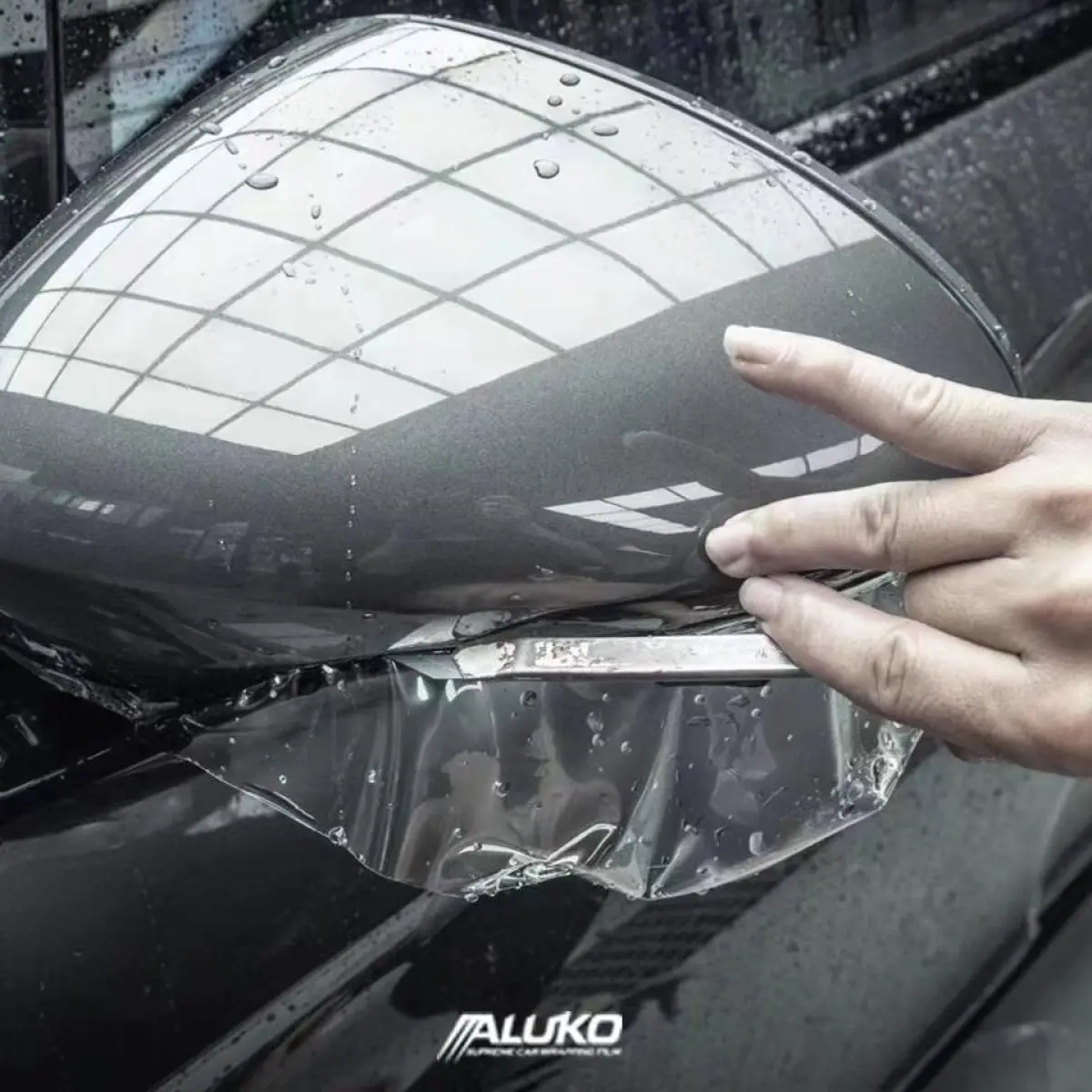
Clear PPF wrap (paint protection film) is a virtually invisible, self-healing barrier that takes the hits—chips, scratches, bug acids, and UV—so your OEM paint doesn’t have to. This guide explains how modern aliphatic TPU films work, what the numbers mean, and when to choose clear PPF, clear matt PPF, or even colored PPF. If you’re new to surface films, start with our home page for broader vinyl wrap options.
How clear PPF works
Premium clear PPF combines a self-healing elastomeric clear coat over an aliphatic TPU core (typically 7–10 mil total thickness). Light swirls in the top coat re-flow with gentle heat while the TPU core absorbs impact energy from road debris. A high-clarity acrylic adhesive bonds the film yet allows clean removal when it’s time to refresh. Industry testing tracks clarity (haze), gloss, chip/abrasion resistance, and weathering so buyers can compare films on real metrics.
Representative benchmarks (from current TDS & standards)
| Property | Typical benchmark | How it’s measured |
|---|---|---|
| Total thickness | ~7.8–8.5 mil (e.g., “8.5 mil” products and ~7.8 mil Pro-series films) | Micrometer; stated in product TDS |
| Self-healing activation | ~60–80 °C (140–176 °F) gentle heat; some premium films recover faster | Manufacturer/installer guidance; heat-activation observation |
| Gloss (60°) | >92–94 GU on high-gloss variants | ISO 2813 glossmeter (20°/60°/85° geometries) |
| Hydrophobicity | Water contact angle ≈ 100–105° on hydrophobic top-coats | Contact-angle goniometer per product TDS |
| Elongation at break | >280–300% (for conformed installs) | Tensile/elongation test (e.g., GB/T 1040.1 / ASTM D412) |
| Clarity / haze | Low-haze transparent film; reported with luminous transmittance & haze % | ASTM D1003 (haze & transmittance) |
| Chip & abrasion resistance | Validated by gravelometer/Taber methods in manufacturer testing | SAE J400 / ASTM D3170 (chips); ASTM D4060 (abrasion) |
| UV/weathering durability | Measured via accelerated UV exposure | ASTM G154 (fluorescent UV) / related practices |
Numbers above reflect ranges commonly published in recent technical data sheets (TDS) for premium films and internationally recognized test methods. Always compare the exact TDS for the specific product you’re buying.
Clear gloss vs clear matt (matte) vs colored PPF
Clear PPF (gloss) is the right choice when you want near-invisible protection and to let the factory finish shine. For owners who love a satin look without repainting, clear matt PPF converts gloss paint to a premium matte aesthetic while keeping the same chip and stain defense. If you want protection plus a color transformation, colored PPF delivers a reversible, paint-safe finish with impact and UV resistance.
Real-world performance: what actually improves ownership
- Stone chips & rash: The TPU core absorbs impact energy that would otherwise crater the clear coat, cutting visible front-end wear dramatically.
- Swirls & micro-marring: The self-healing top coat makes routine wash-induced swirls far less noticeable after sun or warm-water exposure.
- Stains & etching: Bird droppings/bug acids clean off the film more easily than bare clear coat; hydrophobic top-coats reduce water spotting.
- Resale value: Protected panels retain higher gloss and fewer repaints—buyers prefer original paint over refinish.
Installation & care best practices
- Panel prep: Decontaminate and correct paint before install for best optical clarity under film.
- Edges & coverage: High-wear zones (bumper, hood, fenders, A-pillars, rocker panels) benefit most; wrap edges where possible.
- Curing & first wash: Avoid aggressive washing for 7 days; if you see slight “silvering,” it usually dissipates as moisture escapes.
- Maintenance: pH-balanced shampoo, gentle mitts, and a PPF-safe topper help maintain slickness; avoid harsh solvents.
Buying tips for B2C & B2B
- Check thickness & clarity: Films in the ~7.8–8.5 mil class balance impact protection with easy wrap/edge laydown.
- Look for documented standards: Gloss (ISO 2813), haze (ASTM D1003), chip (SAE J400/ASTM D3170), abrasion (ASTM D4060), and UV (ASTM G154) show a vendor takes testing seriously.
- Match finish to goal: Choose clear PPF for invisibility, clear matt PPF for satin looks, or colored PPF for protected color change.
- Ask for the latest TDS: Confirm water contact angle, gloss units, elongation, and warranty. Keep the TDS with your records.
Explore PPF and full-surface styling in our broader vinyl wrap catalog, or go straight to Gloss Clear PPF, Clear Matt PPF, and Colored PPF.
Blog comments
0 Comments