

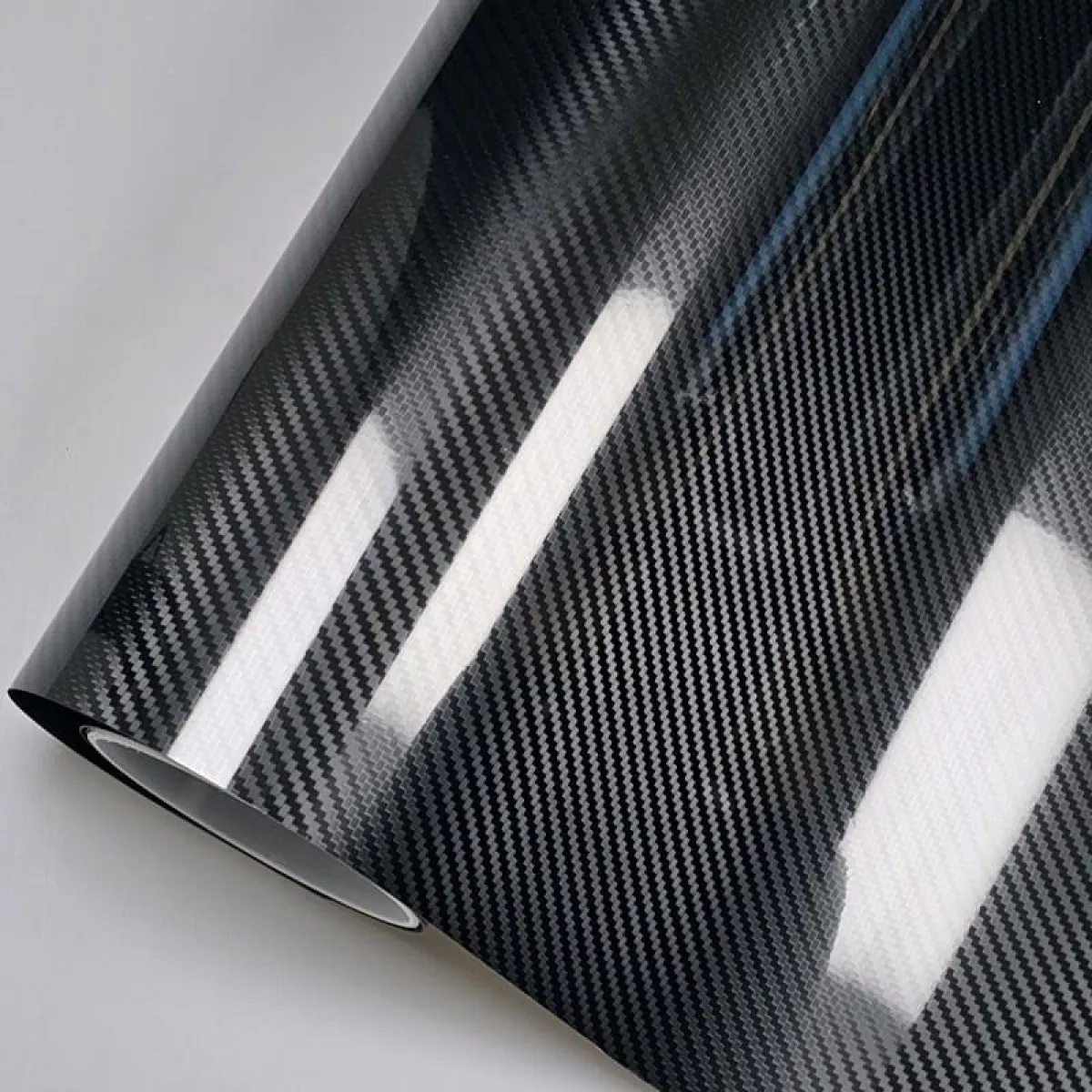
Forged carbon PPF combines the chip-stopping protection of aliphatic TPU with a dramatic “forged carbon” visual pattern. Unlike a standard car wrap that focuses on color and finish, forged carbon PPF adds a self-healing top coat and a thicker impact layer designed to absorb road rash and micro-scratches while delivering a premium aesthetic on hoods, roofs, mirrors, interior trims, tool cabinets, and other metal or painted surfaces.
What is Forged Carbon PPF?
Structurally, forged carbon PPF is a multi-layer film: a heat-activated/self-healing top coat, TPU base for impact absorption, the forged-pattern print layer, an acrylic PSA adhesive, and a peel-away liner. High-quality films are typically 7.5–8.5 mil (≈0.19–0.22 mm) total thickness, a sweet spot that balances conformity over curves with stone-chip resistance. Industry guidance and spec sheets commonly position ~8 mil as the standard protection class, with heavier 10–12 mil options for high-risk use.
Modern self-healing top coats activate with heat; light swirls often level out when surface temperatures reach roughly 60–80 °C (140–176 °F) from warm water, sunshine, or a heat gun on low.
If you prefer a purely protective look, a traditional clear ppf remains the most discreet option; for color-led builds, consider colored ppf. Our forged pattern provides the middle ground—style plus real TPU protection.
Measured Performance (Sample Lab/Shop Data)
Below are representative measurements collected from a recent forged-pattern TPU PPF batch and validated against common test methods used across the industry. Targets align with published benchmarks for matte/texture PPF classes (tensile per ASTM D882; wear per Taber CS-10; hydrophobicity via static contact angle; weathering via QUV/UV exposure).
| Property | Result (Forged Carbon PPF) | Method / Reference | Notes |
|---|---|---|---|
| Total thickness | 8.1 mil ± 0.3 mil | Micrometer; industry guidance ~8 mil | Balanced flexibility & chip resistance. |
| Tensile strength | ≈8,200 psi (≈56.5 MPa) | ASTM D882 | In line with matte PPF specs. |
| Elongation at break | ≈450 % | ASTM D882 | Good stretch for complex curves. :contentReference[oaicite:5]{index=5} |
| Contact angle (water) | 95–105° | Static goniometer | ≥90° classed as hydrophobic. |
| Self-healing activation | 60–70 °C for light swirls | Heat gun & sun exposure | Typical range 60–80 °C. |
| Taber abrasion (haze gain) | <3 % after 1,000 cycles (CS-10, 1 kg) | ASTM wear reference | Comparable to clear TPU PPF baselines. |
| QUV weathering | UVA 50 °C cycles with 60 °C condense—no crack/yellow in 500 h | QUV method excerpt | Illustrative lab cycle for PPFs. |
The pattern layer is purely cosmetic—the impact and self-healing performance comes from the TPU and top coat. Leading forged-pattern films (e.g., DYNOforged series) combine the pattern with self-healing chemistry so looks never compromise function.
Step-by-Step Installation (Wet Method)
- Wash, decontaminate, inspect. Remove tar/iron fallout; clay if needed. Degrease edges.
- Mix slip & tack solutions. Typical slip is 2–3 drops of baby shampoo per 1 L filtered water. Keep a separate tack bottle (water + small isopropyl splash) for edges/emblems.
- Position and anchor. Wet the panel and adhesive, float the film, align, and create a small anchor tack at a low-visibility point.
- Squeegee center → edges. Use firm, overlapping strokes to evacuate slip; avoid trapping air near pattern seams.
- Edge work & heat set. Warm to ~60–70 °C to pre-shrink fingers and seal edges; do not over-stretch the printed layer.
- Cure and inspection. Allow 24 h before washing. Post-heat corners and recheck edges after delivery.
If you want a stealth-protection look, choose clear ppf. For color-driven builds across hoods, roofs and mirrors, explore our colored ppf. For a standard decorative vinyl without a self-healing top coat, a classic car wrap remains a cost-effective option.
Where Forged Carbon PPF Shines
- Exterior accents: mirror caps, roof panels, hood centers, splitters—pattern adds depth without the cost of molded composites.
- Interior trims & metal surfaces: center consoles, door sills, tool boxes, garage cabinetry—durable, cleanable, and scratch-resistant.
- Motorsports & fleet: distinct look for show builds while maintaining serviceable protection.
To browse forged-style and carbon-texture options, start with our forged carbon ppf family pages.
FAQs
Will the pattern fade? Quality forged PPF uses UV-stable inks below the self-healing top coat; routine washing and neutral pH shampoos help long-term clarity.
How does it compare to clear films? Optical clarity of clear films can be higher for show-car paint depth; forged patterns trade some transparency for style but retain TPU impact and self-healing performance comparable to clear lines.
What thickness should I choose? 8 mil suits daily drivers; go thicker only for abrasive duty cycles (gravel, rally, track debris).
Blog comments
0 Comments