

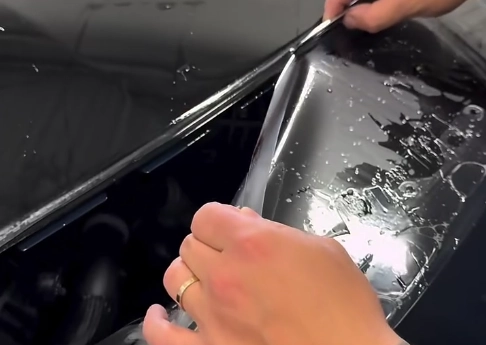
Modern paint protection film (PPF) has evolved from early “clear bra” kits into high-tech, self-healing thermoplastic urethane skins that quietly take the hits so your paint doesn’t have to. In this guide, we’ll break down how PPF is built, how it’s tested, and when it makes financial sense compared with traditional resprays or a basic car wrap.
What Is PPF, Exactly?
Paint protection film (PPF) is a transparent, thermoplastic urethane layer applied over painted panels to shield them from stone chips, bug splatter, road rash, and minor abrasions. It’s widely used across automotive, motorcycle, and even aerospace applications as an OEM-approved way to keep finishes looking new for longer.
Although different brands use slightly different constructions, most modern automotive PPF shares a similar stack:
- Self-healing clearcoat top layer – an elastomeric polyurethane clearcoat that can re-flow fine swirls and wash marring when warmed by engine heat, sunlight, or warm water.
- Aliphatic TPU base film – the main impact-absorbing layer that stops gravel, salt, and debris from cutting into the paint. TPU offers high clarity and flexibility while resisting yellowing compared with older PVC films.
- Acrylic pressure-sensitive adhesive – a clear, stable adhesive that bonds the film to the clearcoat without reacting with modern paint systems.
- Release liner – a removable backing that keeps the adhesive pristine until installation.
High-quality PPF typically measures in the 7.5–8.5 mil range (about 0.19–0.22 mm) of total thickness, a sweet spot that balances conformity over complex curves with serious impact resistance. Many leading films from global brands are built around an 8 mil construction, with heavier 10–12 mil options reserved for trucks, off-road builds, or track cars that see extreme abuse.
How Modern PPF Technology Works
Self-healing chemistry
The “magic trick” of today’s premium PPF is the self-healing clearcoat. Instead of a brittle top layer, manufacturers engineer an elastomeric polyurethane surface that can flow microscopically when warmed. Light scratches and wash marring gradually level out, restoring gloss without machine polishing or clearcoat loss.
Engineered for extreme environments
Good PPF isn’t just thicker plastic. Films are engineered to stay flexible and bonded from winter cold to summer heat. Industry guides for automotive PPF commonly call out operational ranges from around −40 °C up to +90 °C, ensuring the film won’t crack, peel, or lose adhesion on hot hoods or frozen bumpers.
To validate this performance, serious manufacturers subject their films to ASTM-based testing for:
- Tensile strength and elongation – making sure the TPU stretches over complex curves without tearing.
- Adhesion – confirming the adhesive system remains stable on OEM clearcoat over time.
- Chemical and stain resistance – exposure to fuels, de-icing salts, bug acids, and detergents.
- Accelerated weathering and UV stability – simulating years of sun and environmental exposure in the lab.
PPF vs. traditional wraps
A cosmetic vinyl wrap is excellent for color changes and graphics, but it is typically thinner and less impact-oriented than PPF. Wrap films usually focus on style, while PPF is designed from the ground up as a sacrificial barrier you can replace at the end of its life, revealing untouched paint underneath. In practice, many owners now pair the two: a design-focused wrap on less exposed areas, and PPF on the front end, rocker panels, and high-impact zones.
Types of PPF: Clear, Colored, and TPU Wrap Hybrids
As the category matures, PPF is no longer limited to completely transparent gloss films. You can now choose between “invisible” protection, color-changing protection, and TPU-based wraps that blur the line between style and defense.
Clear PPF for a factory-fresh look
Traditional clear PPF is still the go-to option for drivers who want maximum protection with minimal visual change. A high-clarity, hydrophobic topcoat preserves the OEM color and gloss while making the car easier to wash and dry. If you want your vehicle to look stock but stay protected for years, a clear ppf installation over the front end and other high-impact areas is the logical first step.
Colored and textured PPF
For drivers who want both impact resistance and a visual upgrade, colored and forged-pattern PPF bring texture and tone into the film itself. These products use multi-layer constructions—TPU impact layer, printed design layer, and self-healing clearcoat—while maintaining thickness around the 8 mil mark and multi-year warranties. Explore options like forged carbon, matte, and tinted finishes in the colored ppf range when you want more drama than clear film alone can offer.
TPU wrap: color change with PPF-grade toughness
TPU-based styling films sit between classic vinyl wraps and pure PPF. By using TPU instead of PVC, they offer better elasticity, chemical resistance, and chip protection while still delivering strong color and finish options. ALUKO’s tpu wrap series is designed for owners who want a bold color change but don’t want to sacrifice the resilience associated with modern PPF technology.
Real-World Benefits: Why PPF Is More than Just a Clear Sticker
On paper, PPF is about thickness, mil ratings, and test data. On the road, it’s about keeping your vehicle looking fresh while controlling long-term ownership costs.
- Stone-chip and road-rash protection – The TPU layer absorbs the energy from gravel, sand, and debris, dramatically reducing the chips that would otherwise sandblast your front bumper, hood, and rocker panels.
- Self-healing swirl resistance – Fine swirls from washing, tunnel car washes, or dust wipes can disappear as the self-healing clearcoat relaxes with heat, preserving gloss without frequent polishing.
- Defense against bugs, tar, and chemicals – PPF acts as a sacrificial layer against insect acids, tar, bird droppings, road salt, and other contaminants that can etch or stain clearcoat if not removed quickly.
- UV and oxidation control – By absorbing part of the UV load and shielding the clearcoat from direct exposure, high-end films help slow oxidation and fading, especially on darker colors.
- Simpler washing and drying – Hydrophobic topcoats cause water to bead and sheet off, making regular maintenance quicker and reducing the chances of wash-induced defects.
- Long-term value and resale – Many PPF brands now quote service lives of 8–10+ years when installed and maintained correctly, which can help keep paint closer to “showroom” condition for second owners.
When you compare costs, PPF is an investment but not an unreasonable one. In many markets, partial front PPF packages start around the mid-hundreds of dollars, full front coverage typically falls between roughly $1,400 and $2,500, and full-body wraps can range from about $4,500 up to $7,000+ depending on vehicle size and film. By contrast, repainting a single front bumper can easily run $300–$500 or more once materials, labor, and modern sensor calibration are factored in, and full resprays quickly climb into five-figure territory.
For daily drivers, that math often works out: a quality PPF installation can prevent multiple paint repairs over the life of the vehicle while also keeping the car more desirable on the used market.
How to Choose the Right PPF Solution
Because “PPF” now covers a broad family of films—clear, colored, matte, gloss, and TPU-based wraps—it helps to work backwards from how you drive and what you expect from the car.
- Define your risk profile.
Long highway commutes, winter salt, gravel roads, and track days all increase the value of PPF. City cars that mostly park indoors may get more benefit from targeted coverage (bumpers and mirrors) plus a quality car wrap or ceramic coating on less exposed panels. - Pick a coverage pattern.
Common packages include partial front, full front (bumper, hood, fenders, mirrors), a “track pack” with rocker panels and A-pillars, and full-body wraps. The more you drive on rough roads or at higher speeds, the more sense a full front or full body package makes. - Choose between clear, colored, and TPU-wrap solutions.
If you love your factory color, a high-clarity clear ppf package will keep it looking new. If you want a fresh look and extra protection, consider colored ppf or ALUKO’s tpu wrap ranges for color-changing protection with PPF-grade toughness. - Look for standards, data, and warranty.
Ask about ASTM-referenced testing, UV and chemical resistance data, and manufacturer warranties. Leading platforms such as 3M Scotchgard™ Pro Series and XPEL ULTIMATE PLUS™ publish technical data sheets and multi-year warranties that show exactly how the films are built and validated. - Prioritize experienced installation.
Even the best film can underperform if edges are lifted, contamination is trapped, or templates don’t align. Choose installers who use high-quality films, pattern software, and controlled installation environments rather than cutting corners on prep and cure time.
PPF with ALUKO: Protection That Matches Your Build
Whether you want an almost invisible shield on a new daily driver, a bolder look with forged or tinted films, or a full color-change with TPU-based styling film, the core technology is the same: a carefully engineered, self-healing TPU system that takes the abuse so your paint doesn’t have to.
Explore ALUKO’s PPF and TPU ranges to match protection level, style, and budget:
- clear ppf for OEM-look gloss or stealth matte
- colored ppf for forged, tinted, and textured finishes
- tpu wrap options that combine color change with impact resistance
With the right PPF system and coverage map, you can enjoy your car the way it was meant to be driven—without flinching every time you hear gravel ping the front bumper.
Blog comments
0 Comments