

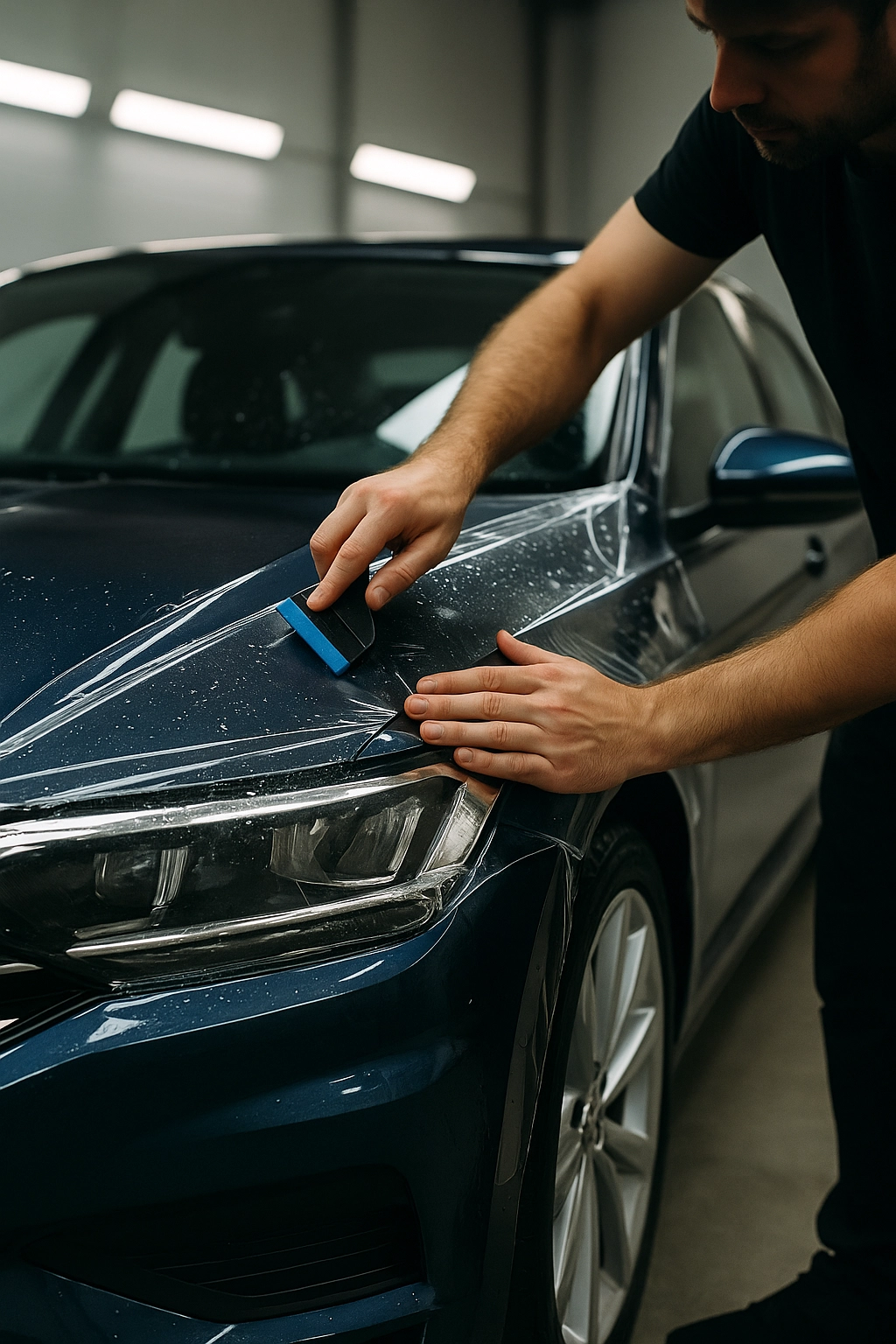
If your goal is to keep factory paint glossy, swirl-free, and chip-resistant, you’re choosing between three families of paint protection: paint protection film (PPF), ceramic coatings, and wraps. Each protects in a different way, looks different, and excels in different scenarios. Below is a concise, data-driven breakdown—plus quick recommendations—so you can pick the setup that matches your driving, finish, and budget.
What Paint Protection Film (PPF) does best
PPF is a clear thermoplastic polyurethane (TPU) film applied on top of your clear coat to absorb impacts from gravel, salt, and road debris. Modern films feature self-healing clear coats that warm up (sunlight, warm water, or slight heat) and visually “erase” minor swirls. Clear films come in two primary finishes:
- clear gloss ppf — maximizes depth and mirror gloss.
- matt ppf — turns paint into a smooth satin look while still protecting it.
For color-matching or bold hues, you can also choose colored ppf—a paint-like finish with the same impact resistance as clear films. High-quality PPF typically measures about 8 mil (~0.2 mm), creating a thick, soft barrier that can take real hits. Top-tier films from leading brands carry up to 10-year warranties when installed by certified shops, making them the premium choice for front ends, rockers, and high-impact zones.
Ceramic coatings: thin, hard, slick
Ceramic coatings are liquid polymers that cure into a very thin, very hard layer over your clear coat. They add chemical resistance and make washing easier thanks to excellent hydrophobicity. They do not stop rock chips like a thick film can—but they reduce micro-marring and keep the surface cleaner, longer. A smart setup is PPF on impact zones, then a coating on top of both paint and film for better water behavior and easier maintenance.
Vinyl wraps: style first, protection second
A vinyl wrap primarily changes color/finish (gloss, matte, satin, metallic, color-shift) and provides light scratch resistance. Wraps are thinner than PPF, so they’re not designed for heavy impact protection, but they can protect the OEM paint from UV and light abrasion and give you a reversible restyle. If you want the look of matte or a unique color without repainting—and can live with less chip resistance—vinyl is a great value.
Head-to-head comparison
| Method | Primary Benefit | Thickness / Build | Best For | Finish Options | Typical Warranty* |
|---|---|---|---|---|---|
| Clear PPF | Impact & chip resistance; self-healing swirls | ~8 mil film (~0.2 mm) | High-impact zones, daily drivers, long highway trips | High-gloss clarity | Up to 10 years with leading brands |
| Matte (Satin) PPF | Impact protection + matte transformation | ~8 mil film (~0.2 mm) | Matte look without repainting; stealth restyle | Satin/matte sheen | Up to 10 years with leading brands |
| Colored PPF | Paint-like color + impact protection | ~8 mil film (~0.2 mm) | OEM-like color change with chip resistance | Gloss or matte colors | Up to 10 years with leading brands |
| Ceramic coating | Hard, slick, hydrophobic surface; easy washing | Very thin (≈ 1 µm typical) | Swirl mitigation and maintenance on paint/PPF | Amplifies existing gloss or satin | Varies by brand/tier (often 2–7 years) |
| Vinyl wrap | Color & finish restyle; light protection | ~3–4 mil vinyl | Reversible color change with manageable cost | Gloss, matte, satin, metallic, color-shift | Typically 3–7 years (finish-dependent) |
*Warranty length depends on brand, installer certification, climate, and care.
Choosing your stack in 2025
For most owners: apply clear or matt ppf on the front bumper, hood, fenders, mirrors, and rocker panels. Coat the remaining painted panels with a pro-grade ceramic to improve washability and reduce wash-induced swirls. If you want a dramatic restyle with impact protection, step up to colored ppf. If your priority is purely aesthetics and budget, a high-quality vinyl wrap is the most flexible and reversible route.
Maintenance tips that preserve gloss
- Two-bucket contact wash with pH-neutral soap; pre-rinse heavy grit to reduce marring.
- Use plush microfiber and dry with forced air or clean drying towels to avoid micro-scratches.
- For self-healing films, warm water or gentle sun exposure can help minor swirls fade in the topcoat.
- Top your PPF or coating with a compatible sealant for extra slickness and easier cleanup.
Whether you choose film, coating, wrap—or a hybrid—the right paint protection plan should match how and where you drive, your finish goals (gloss vs matte), and your tolerance for chips. With modern PPF’s self-healing topcoats, thin hard ceramics for slickness, and the design freedom of wraps, it’s easier than ever to keep your vehicle looking factory-fresh for years.
Blog comments
0 Comments