

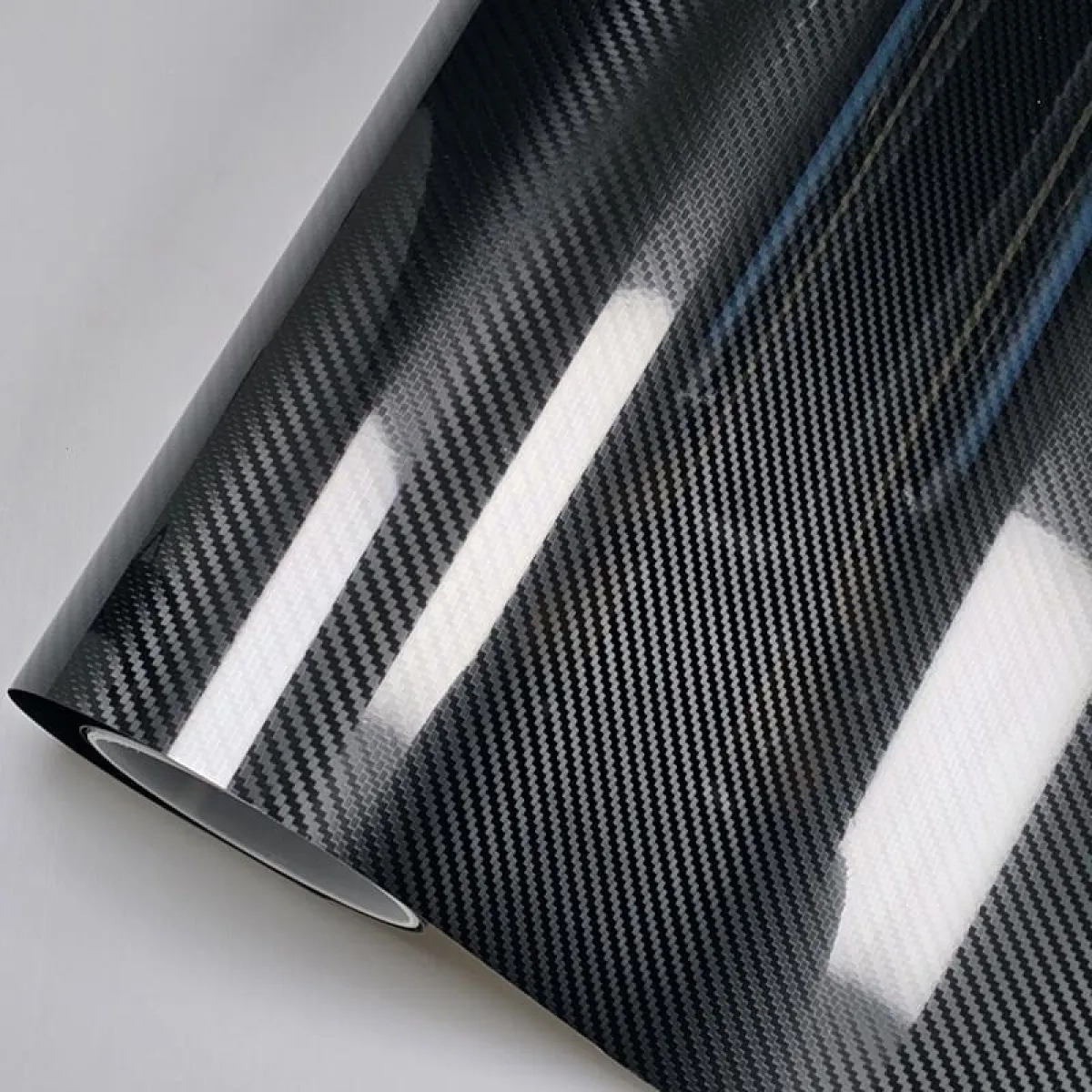
TPU glossy carbon fiber films merge the deep, 3D look of a carbon weave with the functional protection of modern paint-protection technology. If you want a finish that reads premium in the sun but still blocks chips, swirls, and UV, this category is fast becoming the go-to choice for enthusiasts and shops alike.
What is TPU glossy carbon fiber?
TPU glossy carbon fiber films are aliphatic thermoplastic polyurethane (TPU) paint-protection films embossed with a carbon-weave texture and capped with a high-gloss, self-healing topcoat. The result is a finish that looks like deep, wet carbon while behaving like PPF: it resists chips and road rash, helps mask swirls, and preserves paint beneath.
Compared with traditional vinyl wrap, which is typically a PVC-based cosmetic layer, TPU films are engineered for impact and environmental durability. If you already spec or install ppf wrap, this carbon-fiber variant simply adds the dimensional aesthetic without sacrificing protection.
Optical clarity & gloss—how quality is measured
Two metrics tell you most of what you need to know about the “wet” look customers want:
- Gloss (GU)—commonly measured at 60° and, for very high-gloss surfaces, at 20°. These geometries are standardized and let you compare films consistently across brands.
- Haze (%)—indicates wide-angle light scatter through the clear film. Low haze preserves color depth and panel definition, especially on dark paint.
Ask your supplier for test methods on spec sheets—gloss per ISO 2813/ASTM D523 and haze per ASTM D1003 are widely used across the industry. High-end TPU carbon films target very high gloss with low haze to maintain that “wet carbon” depth customers expect.
Durability & lab tests that matter
Beyond looks, glossy carbon TPU should behave like true PPF. Look for:
- Self-healing topcoat—the elastomeric clearcoat reflows under heat (sunlight or warm water/air), softening the appearance of minor marring and washing swirls.
- Chip resistance—many labs evaluate coatings’ resistance to gravel impact using standardized gravelometer methods. While not every brand publishes the exact rating, asking for chip-resistance methodology is smart.
- Yellowing/UV aging—aliphatic TPU chemistries are selected to resist yellowing; request ΔYI or exposure details if you need data for fleets or long warranties.
Thickness & film build
Premium gloss PPF typically targets around 8–8.5 mil total thickness (substrate + topcoat, excluding liner), balancing conformability with impact absorption. In advanced constructions, a harder top TPU layer can improve stain resistance while a softer base helps absorb road-debris energy—useful on high-impact zones like rockers or lower doors.
When to choose it vs. clear gloss PPF or traditional vinyl wrap
Choose TPU glossy carbon fiber if you want:
- Carbon depth with protection—you’re after the dimensional weave plus self-healing and chip resistance.
- Daily-driver resilience—the car sees highway grit and parking-lot life, not just shows.
- Low-maintenance shine—heat can minimize fine swirls over time.
Stick with clear gloss ppf if you need:
- Invisible protection—you want the factory color to show exactly as is (no texture).
- Full-body installs on light colors—clear gloss preserves OEM tonality and flake.
Choose classic vinyl wrap if:
- You’re prioritizing color changes, prints, or budget-first cosmetic coverage over impact protection.
Want to preview the look? See our product page for TPU glossy carbon fiber and compare with our clear PPF category here: ppf wrap.
Install & care notes
- Surface prep: Decon and panel clay for best clarity; textured films still show what’s underneath.
- Heat & stretching: Treat like premium PPF—controlled stretch, anchor corners, and relieve tension across weave direction to keep the pattern visually straight.
- Aftercare: Avoid harsh chemicals early; gentle pH-neutral shampoos and microfiber. Heat (sun/air) helps the self-healing clearcoat minimize minor marks over time.
Ready to spec your kit? Explore TPU glossy carbon fiber or go invisible with clear gloss ppf. If you’re planning a full color change, start with vinyl wrap, then add ppf wrap to high-impact zones.
Blog comments
0 Comments