

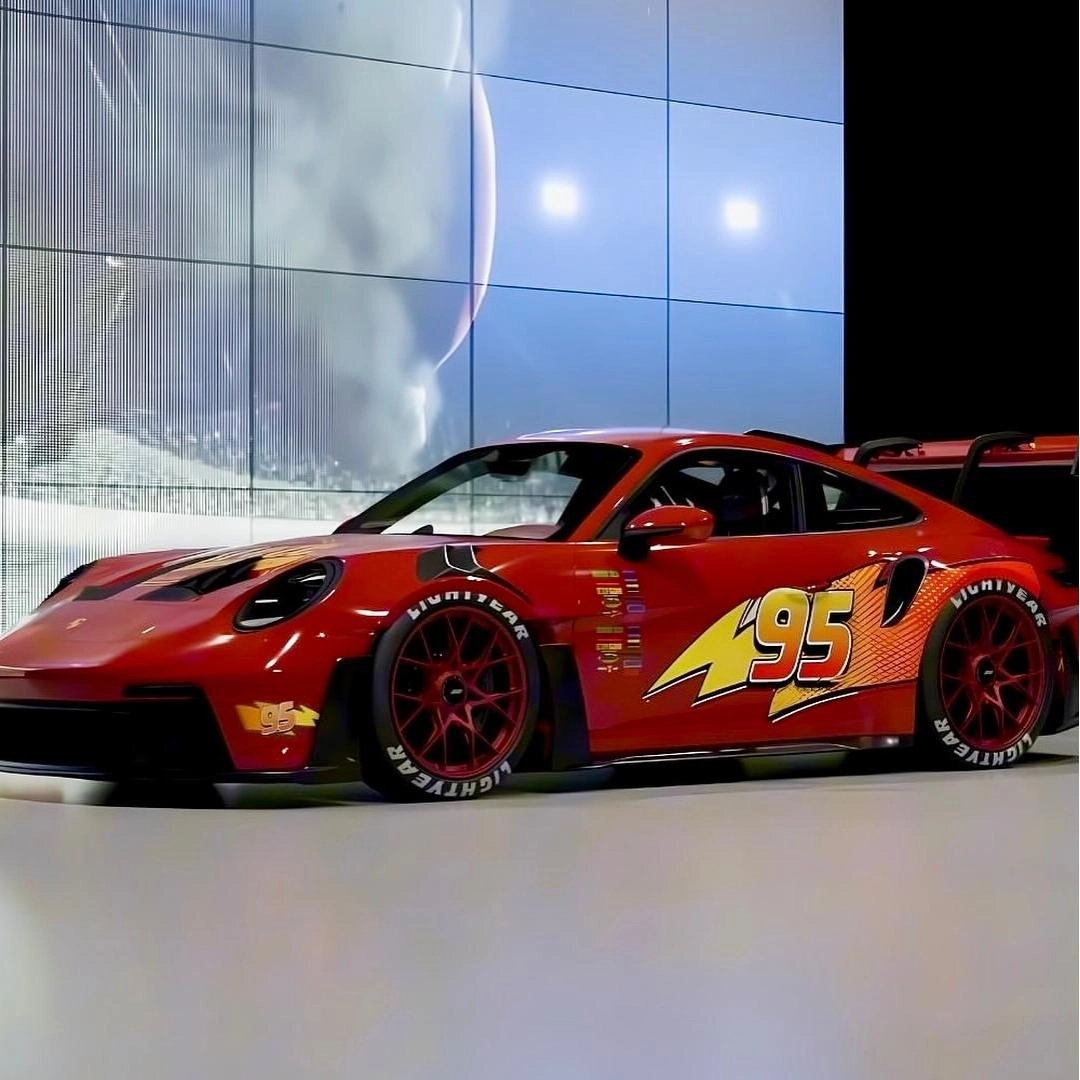
Few designs in modern car culture are as instantly recognizable as a Lightning McQueen car wrap—the bold red, #95 side graphic, bright-yellow lightning bolts, and those playful windshield eyes. What began on the big screen in 2006 has since become one of the most requested pop-culture car wraps for fans, collectors, and show-car owners alike. This post traces how the idea moved from animation to driveway, why today’s materials make a screen-accurate finish possible, and how to plan a custom car wrap that nails the details for your own “car wrap lightning mcqueen” project.
From Movie to Movement
Disney•Pixar’s Cars introduced Lightning McQueen to audiences worldwide and instantly gave designers a vivid visual language to play with: saturated reds, curved lightning streaks, sponsor clusters, and race-number typography. As the character’s popularity spread, early fan builds used vinyl cut graphics and partial decals—fun, but often limited by material stretch and color fidelity on complex curves (bumpers, fenders, and door scallops). The leap from “inspired by” to “looks like it drove out of Radiator Springs” happened as professional wrap films and print technology matured.
Materials Made the Difference
The modern car wraps era relies on premium cast films engineered to conform around channels, deep curves, and compound surfaces—exactly what a Lightning McQueen design demands. 3M’s Wrap Film Series 2080, for example, is a multi-layer, dual-cast film developed specifically for full wraps and accents; it’s more conformable and stretchable than earlier generations and uses air-release technology for cleaner installations. That means crisper edges around the “95,” cleaner transitions at bumper corners, and fewer visible seams in the lightning strokes.
Avery Dennison’s Supreme Wrapping Film (SW900) pushed things further with a broad palette (well over a hundred colors) and a dual-layer construction that blends color, texture, and a protective layer for a paint-like finish. For a lightning mcqueen car wrap, installers often pair high-saturation reds from the color-change range with printable films and laminate for sponsor clusters and character elements—keeping durability and gloss level consistent panel to panel.
Printing Tech: Why Your Ink System Matters
Whether you’re printing the number “95,” sponsor decals, or those unmistakable eyes, ink flexibility and color stability are critical. Industry guides highlight resin/latex and eco-solvent systems for their balance of durability and stretch on vehicle wraps, with ongoing debate about where UV fits best (great on rigid media and flatter panels, but more prone to cracking under heavy stretch on deep contours). The short version: match your ink set to your film and the contours on your car, run stretch tests, and follow your film maker’s ink-compatibility bulletins.
Real-World Builds (and Why They Work)
In the past few years, real-life Lightning McQueen builds have shown up everywhere—from lightweight roadsters and drift coupes to family hatchbacks and muscle cars. The best ones combine accurate graphic layout with pro-grade material choices and meticulous installation: aligned panel breaks, consistent gloss, and sponsor clusters scaled to the car’s proportions. Round-up features have documented everything from Miata and Mustang interpretations to Beetle and BMW platforms—proof that the concept is versatile if you respect the original design language.
Planning Your Own “Car Wrap Lightning McQueen” Project
1) Nail the design language.
A convincing Lightning McQueen look balances four elements: (a) saturated red base, (b) proportionally correct lightning bolts, (c) the #95 number set in the proper angle and scale, and (d) sponsor clusters spaced to feel “race legal,” not cluttered. Work from a vector template of your exact car and mock everything in 1:1 scale. This is where a custom car wrap earns its keep—your designer can tweak every curve to match your panel breaks.
2) Choose the right film stack.
Use cast color-change film for the red base and printable wrap film + gloss laminate for graphics that must span multiple curved panels. Modern cast films (3M 2080, Avery SW900) give you the stretch and repositionability needed to keep edges smooth and seams discreet, even across bumper recesses and door scallops.
3) Match ink to the job.
If your design requires heavy stretching—rear quarters, front bumper inlets—prioritize ink sets known to flex without micro-cracking under heat. Resin/latex and eco-solvent systems are widely used for full wraps; if you’re considering UV, restrict those prints to the flattest panels or trim pieces unless your film maker explicitly approves otherwise. Always confirm ink/film compatibility with your supplier before print.
4) Prototype before you commit.
Print a mini “sponsor stack” and a #95 sample at final scale, then test-install on a sacrificial panel or an off-car bumper. You’re checking three things: color under daylight vs. shop light, edge-hold in deep channels after 24–48 hours, and gloss continuity between base film and laminated graphics.
5) Respect proportions—not everything needs to be 1:1 Pixar.
Real cars don’t share the same silhouette as McQueen. Translate the spirit, not just the pixels: adjust lightning curves to ride along your body lines, and let the #95 land where the panel is visually calm (often just behind the door seam). This is the difference between a cosplay-ish wrap and a convincing hero-car look.
6) Plan the install like a motorsport livery.
Pre-panel your graphics so critical elements don’t land on door handles, fuel doors, or parking-sensor cutouts. Dry-fit with masking-taped registration marks before you peel a single liner. Professional installers will heat-set and post-heat according to film specs so edges don’t lift after a few hot/cold cycles—vital on front lips and wheel-arch returns. (Your installer will reference the film maker’s temperature/time guidance.)
7) Finish & care.
After install, avoid pressure washers and harsh chemicals for the first week. Hand-wash and use wrap-safe detail sprays to keep gloss high and contaminants off the film. Good maintenance pays dividends in color retention—especially with saturated reds.
Common Questions
Is a Lightning McQueen wrap legal on the street?
Design expression is generally fine, but any use of protected logos or characters should be cleared with rights holders. Many owners opt for “inspired by” graphics that evoke the look without using protected marks. (Consult a professional if you’re unsure.)
What does it cost?
Prices vary with car size, panel complexity, film choice, and design time. Screen-accurate builds typically require more print and install hours than a single-color change wrap—plan accordingly.
How long will it last?
Quality cast films and laminates are designed for years of outdoor use when installed correctly and maintained well; always refer to the film maker’s product bulletin and warranty for your climate and storage conditions.
Blog comments
0 Comments