

What Is a Custom Vinyl Wrap?
A custom vinyl wrap is a precision-cast PVC or advanced TPU-based film that is applied over your vehicle’s painted surfaces to change color, add graphics, or protect the finish. Compared with paint, wraps are reversible, typically faster to install, and enable complex designs—gradients, textures, chrome-like effects, and motorsport liveries—without permanent alteration. If you’re new to wraps, start with our overview of car wrap fundamentals and finish options.
Choosing the Right Material
Cast vs. Calendered Films
Most full-vehicle color-change wraps use cast films because they conform more easily to curves and recesses with minimal shrink-back. Calendered films are excellent for partial wraps, short-term promotions, and flat panels. Finished thickness for automotive wraps commonly falls in the ~3–4 mil (≈75–100 µm) range, balancing conformability with scuff resistance.
Finishes and Effects
Popular finishes include gloss, satin, matte, metallic, pearl, color-flip, and textured variants (e.g., carbon fiber). Specialty effects—mirror chrome, forged carbon, or glitter—can be used as accents to reduce cost while maximizing visual impact.
Printed vs. Color-Change
A printed custom vinyl wrap allows full-fidelity artwork (logos, patterns, race numbers), laminated for UV and abrasion protection. Color-change films are pre-pigmented and ideal when you want a solid, ultra-clean finish with OEM-like panel depth.
Design Workflow: From Concept to Print
- Define the brief. Vehicle model, year, trim, use case (daily driver, show car, fleet), budget, and timeline.
- Collect templates. Professional vector templates (true scale) help align body lines, handles, and sensors.
- Color management. Approve physical swatches or test prints. Screens differ—evaluate colors in daylight.
- Panelization & seams. Plan where graphics cross panel gaps. Hide seams in low-visibility areas when possible.
- Proofing. Use scaled proofs with measurements, bleed, and overlap notes for installers.
Pro tip: Aim for 10–20 mm bleed around each panel. Mark critical alignment points (e.g., fuel cap center) on the print file.
Installation Best Practices
Surface Preparation
- Wash with pH-neutral soap, rinse thoroughly, and dry with lint-free towels.
- Clay bar or decontaminate to remove embedded particles; wipe down with isopropyl alcohol (IPA 70%+) to degrease edges.
- Repair chips or failing clear coat; wraps adhere best to smooth, sound paint.
Environment & Tools
- Ideal install temperature: ~18–24 °C (65–75 °F); avoid direct sun and dusty areas.
- Use quality squeegees (soft/hard edges), low-friction buffers, heat gun, magnets/tape, and an IR thermometer for post-heat checks.
Application Technique
- Hinge method & tension control: Create a center hinge, tack, then work outwards in controlled strokes.
- Contouring: Warm the film before stretching into deep recesses; avoid overheating or over-stretching patterns.
- Post-heating: After edges/recesses are set, post-heat to the manufacturer’s spec (commonly ~90–100 °C / 194–212 °F) to lock memory.
- Edge sealing: Use primers or edge-seal tape in high-stress zones (door edges, bumpers, rocker panels).
Maintenance & Longevity
Allow 24–48 hours for adhesive wet-out before washing. Hand-wash is preferred; touchless bays are acceptable if you keep the wand ≥ 1 m (3 ft) away and avoid aiming directly at edges. Use pH-neutral shampoos and microfiber mitts. For gloss films, periodic spray detailers help sheath water and minimize spotting; for matte/satin, use matte-safe cleaners to avoid adding shine.
Expected service life depends on film type, climate, sun exposure, and care. As a practical range, many cast films maintain appearance for ~3–5+ years on vertical panels; horizontal surfaces and harsh UV environments age faster. Housings around exhausts, front lips, and rocker panels see more abrasion—inspect and touch up as needed.
Compliance, Badging & Iconic Liveries
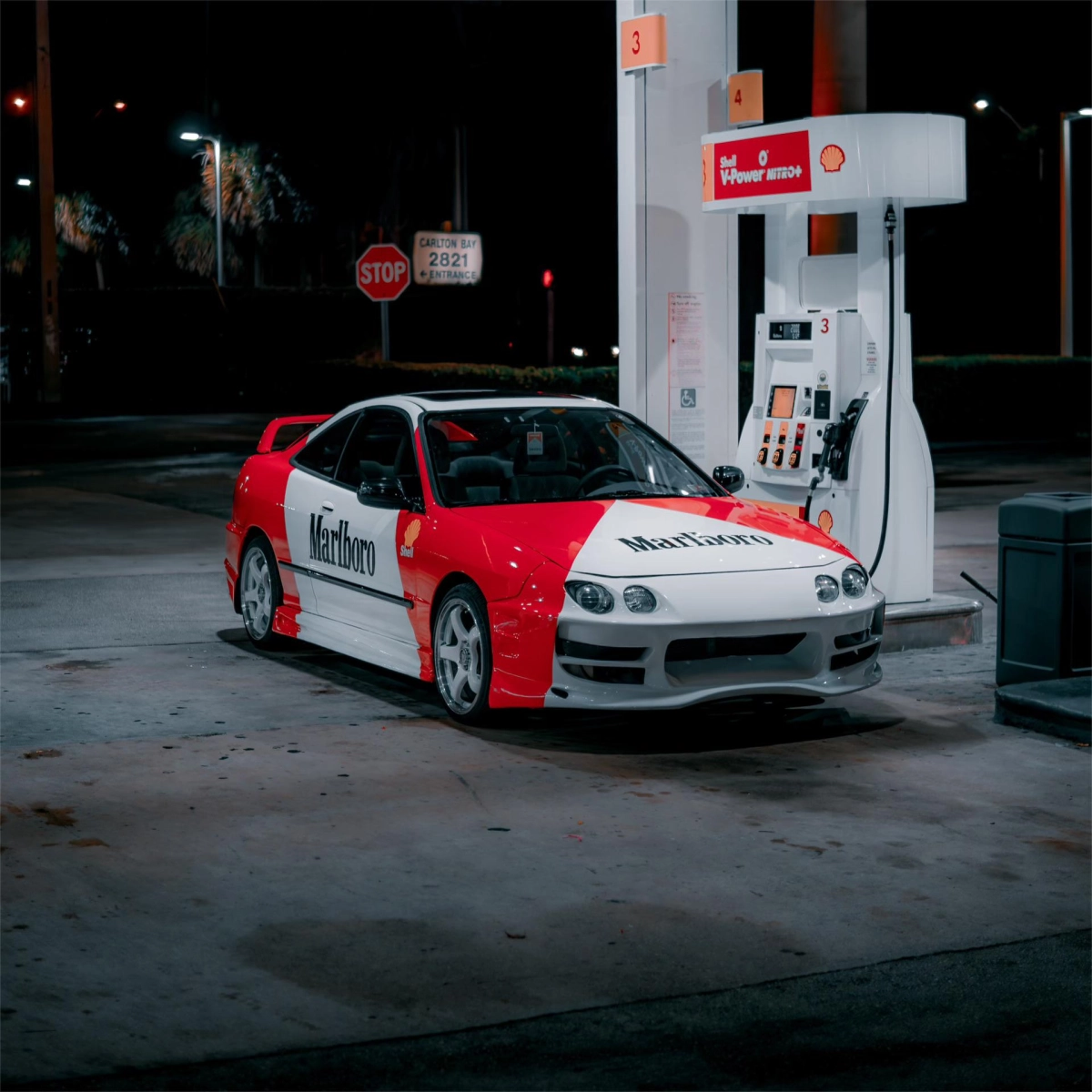
Complex brand liveries remain a favorite in the enthusiast scene. If you love the classic motorsport aesthetic, consider a themed kit such as a marlboro wrap bundle for a cohesive, high-contrast look across hood, doors, and quarter panels. Always respect local regulations for commercial signage, number placements, and road-use rules.
Cost & Planning Tips
- Material + complexity: Chrome, color-flip, and multi-layer designs cost more and install slower.
- Prep saves money: Arrive with a clean, decontaminated vehicle; remove badges/moldings if requested.
- Future service: Keep leftover film (1–2 linear meters) for bumper repairs or door-edge refreshes.
Ready to plan your wrap?
Explore finish options, upload your artwork, or work with our designers to develop a print-ready layout. Start with the car wrap overview, dive into our custom vinyl wrap design resources, or choose a motorsport-inspired marlboro wrap kit.
Blog comments
0 Comments