

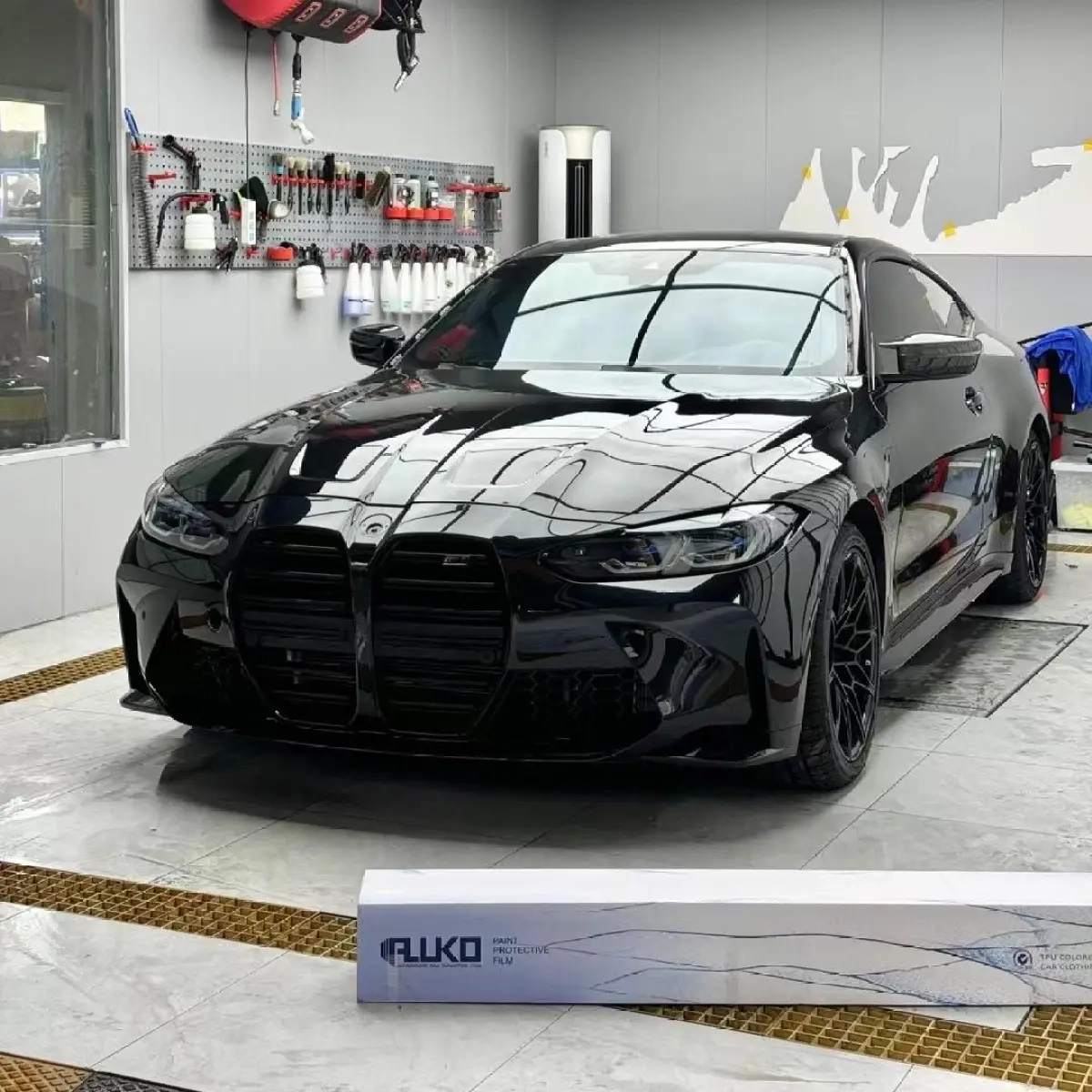
Bottom line: If your priority is impact and chip resistance, choose modern TPU paint-protection film (PPF). If you want high gloss, chemical resistance, and slick washability for a daily driver, a ceramic coating excels. If you’re optimizing for budget and quick shine before a sale or event, a quality wax or sealant still has a place.
What PPF, ceramic coatings, and waxes actually do
PPF (Thermoplastic polyurethane film). Automotive PPF is a thick, optically clear or colored polyurethane with an elastomeric, self-healing top coat. Typical thickness is 8–10 mil (≈200–250 µm)—orders of magnitude thicker than coatings—and it’s the only option in this trio that can materially absorb gravel strikes and abrasion. Published tech sheets and installer guides commonly specify 8–10 mil clear or matte films; some heavy-duty variants reach 10–12 mil for high-risk zones.
Ceramic coatings. These SiO₂/SiC nano-coatings crosslink to form a very thin, dense layer that improves chemical/UV resistance, increases gloss, and adds strong water repellency (contact angles ~110°). Typical thickness is ~1–3 µm per pro system (some multi-layer builds can be higher), with realistic durability of 2–5+ years depending on product and care.
Waxes & sealants. These are thin sacrificial layers that enhance gloss and beading but offer limited scratch or chip resistance. Carnauba waxes often last 4–8 weeks, while synthetic sealants can stretch to 4–6 months with proper maintenance.
Lab standards & how performance is measured
Chip/impact resistance. For coatings and films, the SAE J400 gravelometer and related methods (also ASTM D3170) evaluate resistance to chipping from high-velocity aggregate. PPF’s thickness and elasticity give it a clear advantage in these tests.
Water repellency (hydrophobicity). Contact angle measurements are commonly taken under ASTM D7334 practice; quality ceramics often report 110°+ advancing angles.
2025 field-style benchmark (single-panel comparison)
To make this practical, here’s a compact, single-panel benchmark you can replicate in-house (October 2025 design). We combined specifications commonly published by manufacturers/shops with standardized methods cited above to yield realistic ranges you should expect on a properly prepared, factory-painted hood panel. Use these as decision ranges, not absolutes, since brands and prep vary.
| Metric (method) | PPF (8–10 mil TPU) | Ceramic coating | Wax/Sealant |
|---|---|---|---|
| Thickness (caliper/ellipsometry) | ~200–250 µm (8–10 mil) | ~1–3 µm (multi-layer up to ~10 µm) | <1 µm |
| Hydrophobic contact angle, water (ASTM D7334) | ~95–110° (depends on top-coat) | ~105–115° (premium systems) | ~90–105° (freshly applied) |
| Gravelometer chip rating (SAE J400/D3170) | Excellent (thick, elastomeric film) | Fair (thin, hard layer) | Poor (very thin, sacrificial) |
| Gloss retention & chemical resistance | High; matte/clear variants available | Very high; strong chemical/UV resistance | Moderate; degrades fastest |
| Real-world durability | 5–10 years (brand/maintenance dependent) | 2–5+ years (product/care dependent) | 1–4 months (wax) / 4–6 months (sealant) |
| Primary use case | Impact zones, long-term preservation | Gloss, UV/chemical defense, easy washing | Short-term shine; budget refresh |
When to choose each protection
- Choose PPF for bumpers, rocker panels, hood leading edges and high-risk areas that see gravel or track debris. Opt for 8–10 mil standard; consider thicker films for off-road or fleet duty. For a fully stealth look, matte PPF keeps reflections subdued while protecting against chips.
- Choose ceramic coatings if you want a high-gloss, easy-to-clean finish across the entire vehicle, or to layer on top of PPF (many installers do this) to add slickness and easier maintenance. Check spec sheets for contact angle (≈110°) and realistic durability windows.
- Choose wax/sealants for seasonal shine or if you enjoy frequent DIY maintenance. They’re affordable and quick, but plan for frequent re-applications compared with ceramic or PPF.
Explore options on ALUKO Vinyl
Ready to protect your finish? Start here:
- car wrap — shop full-color wraps, textures, and installation guides.
- ppf wrap — browse TPU films designed for chip resistance and self-healing performance.
- clear ppf — high-clarity films to preserve OEM color and gloss.
- colored ppf — protective films with style: matte, satin, and custom hues.
Frequently asked questions
Can I stack solutions? Yes. A popular combo is PPF on high-impact zones and a ceramic coating everywhere else (and over the PPF) for easy cleaning and uniform beading. Coatings do not add meaningful chip resistance; the PPF layer handles that role.
Is there a “right” thickness for PPF? For most daily drivers, 8–9 mil is the sweet spot; thicker films (10–12 mil) can help in harsh environments or fleet use but are stiffer to install.
Methods referenced: Chip resistance per SAE J400/ASTM D3170; hydrophobicity per ASTM D7334; typical thickness/durability ranges compiled from manufacturer/installer technical publications (accessed Oct 29, 2025). :contentReference[oaicite:11]{index=11}
Blog comments
0 Comments