

Imagine you drive an electric car every day or have a fancy car you love. What you do, your car type, and if you want to sell it later all help you pick the right paint protection film. People with electric cars buy PPF for long-lasting strength. Collectors want special PPF to keep their cars looking perfect. You can choose packages that match what you want and how much you want to spend, considering the paint protection film cost.
The price of paint protection film varies based on how much you cover:
|
Coverage Type |
Cost Range |
Coverage Areas |
|---|---|---|
|
Partial Front |
$900 – $1,300 |
Hood, bumper, mirrors |
|
Full Front |
$1,400 – $1,900 |
Hood, fenders, bumper, mirrors |
|
Track Pack |
$2,000 – $3,000 |
Full front plus rocker panels, A-pillars |
|
Full Body |
$4,500 – $7,000+ |
All exterior painted surfaces |
Pick ALUKOVINYL’s paint protection film for self-healing, over 350 colors, and up to 10 years of safety. You keep your car safe and feel calm with top PPF.
Key Takeaways
-
Think about how you drive and your car type. This helps you pick the right paint protection film package. If you drive every day, you may want partial coverage. If you collect cars, you might need full body protection.
-
Look at different coverage choices and prices. Packages can be partial front ($600–$1,300) or full body ($4,500–$7,000+). Pick what fits your protection needs and your budget.
-
Check the thickness and quality of the film. Thicker films protect better and last longer but cost more. Find packages with warranties for 5 to 10 years for extra value.
-
Choose a certified installer for the best job. Their skills and good methods help your PPF last longer and look nice.
-
Take care of your PPF by washing your car often. Use gentle soap and soft cloths. This makes the film last longer and keeps your car looking good.
Paint Protection Film Cost Overview
Coverage Options
When you look at paint protection film packages, you see different choices. Each package protects certain parts of your car. Each one has its own paint protection film cost. You pick a package based on how much of your car you want to shield. You also think about how much value you want for your money.
|
Coverage Level |
Part of Vehicle Covered |
Price Range |
|---|---|---|
|
Basic |
Partial front end |
$600 – $1,200 |
|
Standard |
Full front end |
$1,500 – $3,000 |
|
Premium |
Entire vehicle |
$5,500 – $8,000+ |
-
Partial Front Package: This package covers the front bumper, part of the hood, and side mirrors. It is a smart choice if you drive in the city. It helps protect against small chips and scratches.
-
Full Front Package: This package covers the whole hood, full fenders, and front bumper. It gives more strength and value for people who drive on highways.
-
Track Pack Package: This package adds rocker panels and A-pillars to the full front. It is good for people who want extra strength and protection from road debris.
-
Full Body Package: This package covers every painted part. It gives the best strength and value. It is great for collectors or anyone who wants total safety.
Tip: Picking the right coverage helps you balance paint protection film cost and how long it lasts. Think about how you drive and what risks your car faces.
Price Bands 2025
Paint protection film cost in 2025 depends on the package you pick. Prices can change by where you live, who installs it, and your car type. You can use these price ranges to help plan your budget.
|
Package Type |
Price Range |
|---|---|
|
Partial Front |
$600–$1,300 |
|
Full Front |
$1,200–$1,900 |
|
Track Pack |
$1,800–$3,000 |
|
Full Vehicle |
$4,500–$7,000+ |
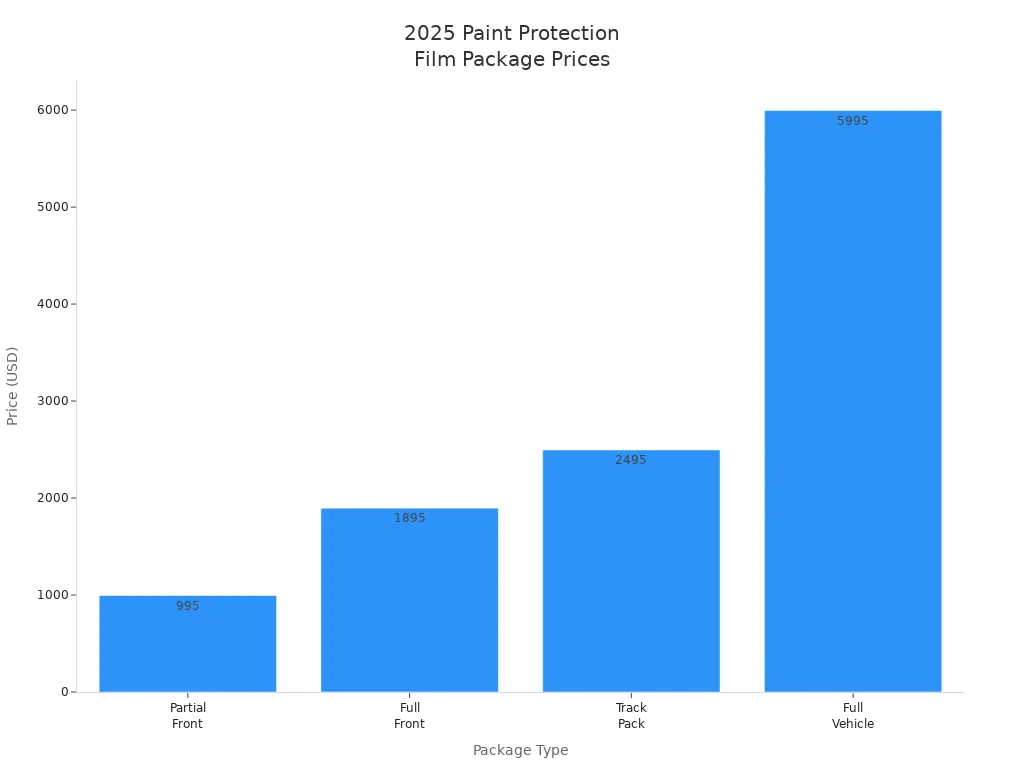
The partial front package costs the least. The full vehicle package costs the most but gives the best strength and value. If you want a middle choice, the full front or track pack package may be right for you.
Key Terms Explained
-
Coverage: This means the parts of your car that the ppf package protects. More coverage costs more but lasts longer.
-
Thickness: Paint protection film thickness is measured in mils. Thicker films, like 8 to 12 mils, last longer. Thin films may need to be replaced sooner.
-
Warranty: Most ppf packages have warranties for 7 to 10 years. Warranties cover problems like peeling or yellowing. They usually work only if you use an approved installer.
-
Finish: The finish is how the film looks. You can pick gloss, matte, or colored finishes. The finish you choose can change the price and how you care for your ppf package.
Note: Always read the warranty before you buy a package. A good warranty gives you more value and helps you feel safe.
When you compare packages, look at the paint protection film cost, how strong it is, and how much it covers. This helps you find the best deal for your car. By learning about coverage, prices, and strength, you can pick a ppf package that fits your budget and needs.
What Affects Paint Protection Film Cost
Coverage & Vehicle Type
The size and type of your car change the price. Big cars like SUVs and trucks need more film. They also take more time to install. Small cars, like sedans and coupes, use less film. This means you pay less. If you pick partial coverage, you save money. Full-body protection costs more. Think about how much of your car you want to cover. Your driving habits also matter.
-
Big cars cost more for paint protection film.
-
Partial coverage saves money compared to full wraps.
-
Sedans and coupes are cheaper to cover than trucks or SUVs.
Material & Thickness
The quality and thickness of paint protection film change the price. Thicker films protect better from scratches. They can heal themselves if scratched. For example, a 10 mil ppf is stronger than a 6 mil film. Thicker film costs more but gives better safety. You need to choose between looks and protection. Good ppf lasts longer and works better.
Tip: Thicker paint protection film protects more, but it costs extra and may look different on your car.
Brand & Warranty
The brand and warranty are important when picking paint protection film. Top brands give better protection and longer warranties. They also protect against sun and stains. These things make the price higher. A long warranty means the brand trusts its product. Look for brands with 5 to 10 year warranties. Longer warranties give you more value and help you feel safe.
|
Feature |
Premium Brands |
Standard Options |
|---|---|---|
|
UV Protection |
Superior |
Basic |
|
Stain Resistance |
Excellent |
Standard |
|
Warranty Length |
5–10 years |
Shorter |
Labor & Region
Where you live and who installs the film change the price. City shops charge more than rural shops. Cities cost more to live in, so prices go up. For example, putting paint protection film on a Tesla Model S in Miami may cost $8,000. In rural Texas, it might cost $6,500. Getting a pro to install it gives the best results. It also adds to the price. Check local shops and ask about their experience with ppf.
-
City shops cost more for installation.
-
Rural shops have lower prices.
-
Professional installation helps your paint protection film last longer.
Note: Always pick a certified installer for paint protection film. This gives you the best protection and warranty help.
Compare PPF Packages
Partial vs Full Front
You have to pick how much protection you want. Partial coverage protects bumpers, hoods, and side mirrors. This is good if you want to save money. It covers the parts that get hit the most. You get help against chips and scratches from driving every day.
Full front coverage gives more safety for your car. It covers the whole hood, fenders, and front bumper. This means better protection from rocks, bird droppings, and sun. Your car can look new for longer. It may also sell for more money later. The front of your car will look even and nice.
Here is a simple comparison:
|
Package Type |
Protected Areas |
User Suitability |
Benefits |
|---|---|---|---|
|
Partial PPF |
Bumpers, hood, side mirrors |
Budget-conscious users |
Cost-effective, targeted protection, quick installation |
|
Full Front PPF |
Hood, fenders, bumper, mirrors |
Highway drivers, enthusiasts |
Maximum protection for front, better appearance, higher resale value |
Tip: If you drive in the city, partial ppf might be enough. If you drive on highways or want more safety, full front is better.
Track Pack vs Full Body
Track pack ppf gives extra protection for sporty cars. It covers places like side skirts and rocker panels. This is best if you drive on tracks or rough roads. It costs more than partial or full front. But you get stronger protection from rocks and dirt.
Full-body coverage wraps every painted part of your car. You get the most protection for your whole car. This is good for collectors or people who want everything covered. Your car stays safe from scratches, fading, and chips. It also looks its best and keeps its value.
Here is a quick look at both:
|
Package Type |
Coverage Description |
|
|---|---|---|
|
Track Pack PPF Wrap |
$2,000–$4,000 |
Covers high-impact areas, ideal for performance vehicles, includes side skirts and lower rocker panels. |
|
Full Body PPF Wrap |
$5,000–$8,000+ |
Comprehensive protection for the entire vehicle, covering all exterior panels with no exposed surfaces. |
-
Track pack ppf is good for people with sporty cars.
-
Full-body coverage gives the most safety and keeps your car looking great for a long time.
Note: If you want the best protection, pick full-body coverage. Your car will stay safe and look great.
Warranty & Aftercare
Warranty Terms
When you pick paint protection film, you want it to last. Most top brands give you a warranty. This protects your money. Warranties can last from 3 to 10 years. The time depends on the brand and how you install it.
|
Brand |
Warranty Length |
Key Clauses |
|---|---|---|
|
XPEL |
Up to 10 years |
Covers problems from making the film. Does not cover damage from bad use, wrong installation, or outside things. |
|
3M |
5–10 years |
Stops yellowing and cracking. Needs a pro to install. |
|
ALUKOVINYL |
8–10 years |
Covers peeling, bubbling, and color changes. Only works with certified installation. |
Always read the warranty before you get paint protection film. You must follow cleaning and care rules to keep your warranty.
Aftercare Tips
Taking care of your paint protection film keeps it strong. Wash your car every week or two by hand. Use soft cloths or sponges. Do not use rough brushes. Pick gentle car soap to clean the film. Regular cleaning helps your paint protection film last longer, even over ten years.
-
Wash your car by hand with soft cloths.
-
Use special car soap for cleaning.
-
Do not use rough cleaners that scratch the film.
-
You can add ceramic coating for more protection and easy cleaning.
-
Look for damage after each wash. Fix small problems if rocks hit your car.
You might need to pay for small fixes or new pieces sometimes. Most top brand warranties cover big problems. You must follow care steps to keep your warranty. Getting a pro to install paint protection film helps it stay strong and look good. Always pick certified shops for the best results and warranty help.
Tip: Good care and pro installation make your paint protection film last longer and keep your car looking great.
Finish & Style Choices
Gloss vs Matte
You can pick gloss or matte for your ppf. Each one looks different and has its own good points.
-
Glossy ppf makes your car look shiny and bright. The colors look stronger and stand out more. Many people like gloss because it shows off the paint. It gives your car a classic and clean look.
-
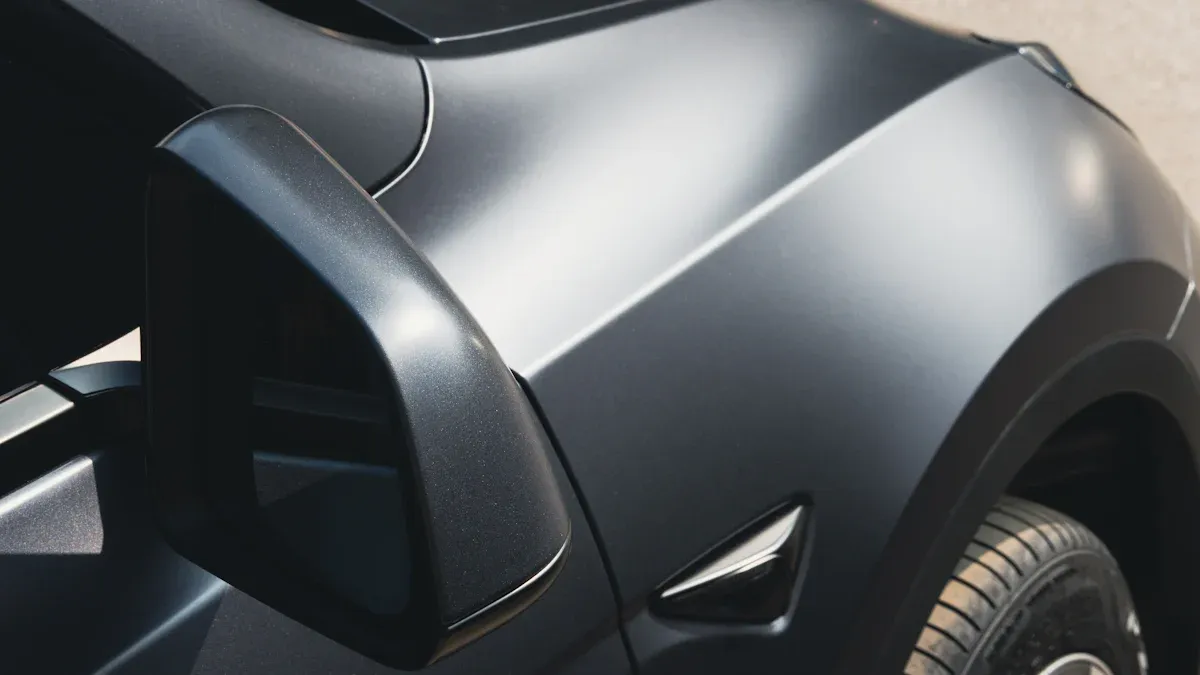
Matte ppf gives your car a flat, smooth look. It does not shine or reflect light. This finish hides small marks or scratches. Matte ppf is popular on sports cars and fancy cars. It makes your car look special and modern.
Glossy ppf is usually cheaper than matte ppf. Matte costs more because it needs special care and materials. If you pick gloss, you need to clean it often to keep it shiny. Fingerprints and smudges show up fast. Matte ppf needs special cleaners to stay nice. Regular soap can hurt the matte finish.
Tip: Choose gloss if you want a shiny, classic car that is easy to clean. Pick matte if you want a cool, modern look and to hide small marks.
Color Options
ALUKOVINYL has more than 350 colors for ppf. You can match your car’s color or try something new. Colored ppf lets you make your car look how you want. It also keeps your car safe from chips, scratches, and sun damage.
|
Feature/Benefit |
Description |
|---|---|
|
Color Options |
Over 350 color choices for full customization. |
|
Self-Healing Technology |
Film heals minor scratches on its own. |
|
Durability |
Strong material protects your car for years. |
|
Hydrophobic Coating |
Resists stains, bird droppings, and harsh chemicals. |
|
High Clarity Material |
Keeps colors bright and protection nearly invisible. |
|
Easy Maintenance |
Designed for simple cleaning and long-lasting beauty. |
Colored ppf is great if you want your car to look different or match a theme. You can get gloss or matte in almost any color. The price can change depending on what you pick. ALUKOVINYL’s ppf is easy to clean and keeps stains away, so taking care of it is simple.
Note: Custom color ppf gives you style and keeps your car safe. Your car will look special and stay protected every day.
Choose the Right PPF for Your Budget
Decision Tree
You want to keep your car safe and not spend too much. The best way to pick the right ppf is to think about how you drive and what you need. Use this easy decision tree to help you find the best package.
|
Driver Type |
Coverage Recommendation |
Why Choose This? |
Typical Budget Range |
|---|---|---|---|
|
Daily Commuter |
Partial Front End |
Shields high-impact areas from chips and scratches |
$600 – $1,300 |
|
Highway Driver |
Full Front End |
Protects against rocks and road debris |
$1,200 – $1,900 |
|
Collector |
Full Body |
Preserves paint and resale value |
$4,500 – $7,000+ |
|
Track User |
Track Pack |
Guards against aggressive wear and tear |
$2,000 – $3,000 |
Tip: If you drive in the city, a cheaper package like partial front coverage gives good protection and saves money. If you drive far or want the most safety, try full front or full body coverage.
When you pick a ppf package, follow these steps:
-
Think about how much you drive and where you park.
-
Choose which parts of your car need the most safety.
-
Check your budget and look at different coverage choices.
-
Look at how strong and good the film is.
-
Think about the warranty and aftercare help.
Budget Estimator
You can guess your total cost for ppf with a simple formula. The price changes based on the package, your car type, how much you cover, and where you live. This helps you plan and not get surprised.
Budget Estimator Formula:
Estimated Cost = Base Price × Vehicle Size Factor × Coverage Level × Regional Adjustment
Here are three examples:
-
Commuter with a Sedan (Partial Front)
-
Base Price: $700
-
Vehicle Size Factor: 1.0 (sedan)
-
Coverage Level: 1.0 (partial front)
-
Regional Adjustment: 1.1 (urban area)
-
Estimated Cost: $700 × 1.0 × 1.0 × 1.1 = $770
-
-
Highway Driver with an SUV (Full Front)
-
Base Price: $1,500
-
Vehicle Size Factor: 1.2 (SUV)
-
Coverage Level: 1.2 (full front)
-
Regional Adjustment: 1.0 (suburban area)
-
Estimated Cost: $1,500 × 1.2 × 1.2 × 1.0 = $2,160
-
-
Collector with a Sports Car (Full Body)
-
Base Price: $5,000
-
Vehicle Size Factor: 1.1 (sports car)
-
Coverage Level: 1.5 (full body)
-
Regional Adjustment: 1.2 (premium city)
-
Estimated Cost: $5,000 × 1.1 × 1.5 × 1.2 = $9,900
-
Note: These numbers are just examples. Your real price might be different because of installer costs and local prices.
You can use this formula to compare packages and see which one fits your budget. If you want to save money, start with partial coverage. If you want the most safety, full body coverage is best.
When you pick the right ppf, you keep your car safe and make a smart choice. Think about what you need, use the decision tree, and check your costs before you buy.
2025 Market Trends & Regional Pricing
Market Data
In 2025, the paint protection film market is changing a lot. More people want to keep their cars safe. Thermoplastic polyurethane is the top choice, with 36.6% of the market. Cars and trucks use 42.4% of all paint protection film. Glossy finishes are the most liked, with 52.4% of the market. Europe has the biggest share at 33.7%. North America comes next with 19.5%. The market is worth $532.3 million in 2025. Experts think it will grow to $838.1 million by 2032. The market grows by 6.7% every year.
|
Segment/Region |
Market Share (%) |
Value (USD) |
|---|---|---|
|
Thermoplastic polyurethane |
36.6% |
N/A |
|
Automotive & transportation |
42.4% |
N/A |
|
Glossy segment |
52.4% |
N/A |
|
Europe |
33.7% |
N/A |
|
North America |
19.5% |
N/A |
|
Global market value (2025) |
N/A |
532.3 Mn |
|
Projected market value (2032) |
N/A |
838.1 Mn |
|
CAGR (2025-2032) |
N/A |
6.7% |
Every year, more people want ppf. Drivers like glossy finishes and strong protection.
Regional Differences
Prices for ppf change depending on where you live. City shops charge more because they have higher costs. Rural shops usually have lower prices. How the film is installed also changes the price. Pre-cut kits cost less but may not fit every car well. Custom installs fit better and look nicer, but cost more. Good brands last longer and have more features, so they cost more. Some shops offer extra things like ceramic coating. These extras make your car safer but cost more money.
To get the best price for ppf near you, you should:
-
Go to a few trusted installers close to you.
-
Ask for quotes that show labor, materials, and extras.
-
Compare film quality and warranty details.
-
Read reviews and ask about work done on your car type.
Tip: Always ask for a written quote before you choose. This helps you know the price and get the best deal.
How to Select a PPF Installer
Shop Checklist
You want your ppf to last and look nice. Picking the right installer is very important. It helps your ppf work well for a long time. Use this checklist to find a good shop.
|
Criteria |
Description |
|---|---|
|
Experience |
The installer should know many vehicle types and application techniques. |
|
Certifications |
Look for industry-recognized certifications, such as XPEL accreditation. |
|
Customer Reviews |
Positive reviews show good service and customer satisfaction. |
|
Warranties |
Comprehensive warranties cover material defects and workmanship. |
|
Professionalism |
The installer's approach and communication matter for a smooth process. |
|
Technology |
Advanced tools and software improve installation quality and precision. |
A skilled ppf installer uses special templates to cut and fit the film. Ask if the shop will register your warranty after they finish. This step keeps your ppf safe and helps if you have problems later.
Tip: Always ask to see proof of certification and warranty registration before you schedule your ppf install.
Installer Questions
Ask some questions before you pick an installer. These questions help you know if they are good at their job.
-
Can you tell me about your experience with my car type?
-
What steps do you follow to install ppf on my car?
-
What kind of warranty do you give for your ppf?
-
How long will the ppf stay good on my car?
-
What is the full price for ppf installation?
-
What should I expect during and after you install it?
A good ppf installer will answer your questions in a simple way. Trusted brands always give warranties for both the work and the product. This warranty helps your car keep its value and makes you feel safe.
Note: Pick an installer who uses template libraries and registers your warranty. This gives you the best results and keeps your ppf strong for a long time.
Related Topics & Resources
PPF vs Ceramic Coating
You want your car to look new and stay safe. You might wonder if ppf or ceramic coating is better. Each one has its own good points. The table below shows how they compare:
|
Feature |
Paint Protection Film (PPF) |
Ceramic Coating |
|---|---|---|
|
Protection Level |
High (physical damage, rock chips) |
Moderate (UV, dirt, minor scratches) |
|
Cost |
$1,000–$5,000+ |
$500–$2,000 |
|
Durability |
Up to 10 years |
2–5 years |
|
Aesthetic Enhancement |
Minimal (maintains factory finish) |
High (glossy, hydrophobic finish) |
|
Maintenance |
Low (occasional inspections) |
Low (easy cleaning) |
-
ppf keeps your car safe from scratches and rocks.
-
Ceramic coating costs less and makes your car shiny.
-
Both choices help you clean your car faster.
PPF protects your car from scratches and road damage. Ceramic coating mostly helps with small scratches and makes your car shiny.
If you want the strongest protection, pick ppf. You can use both together for extra shine and safety.
Maintenance by Color
Your car’s color changes how you clean it. Dark cars show dust and marks more. Light cars hide dust but can show stains. Colored ppf from ALUKOVINYL helps your car look good in any color.
-
Wash dark cars often to keep them clean.
-
Use gentle soap and soft cloths for colored ppf.
-
Check light cars for stains after rain or bird droppings.
-
Hydrophobic ppf makes cleaning easier.
Colored ppf makes cleaning simple. You worry less about scratches or fading. You also get more colors to match your style.
You can look at ALUKOVINYL’s PPF choices and ask for a quote to find the best protection and color for your car.
Picking the best ppf package helps keep your car safe. It also helps you get more money when you sell it. Here are some easy steps to follow:
-
Think about how you use your car.
-
Look up ppf brands and what they offer.
-
Get prices from shops and see which is best.
Local installers know what works for your car. They use new tools and strong films to protect your car and help you sell it for more.
|
Feature |
ALUKOVINYL PPF |
Other Premium Brands |
|---|---|---|
|
Lifespan |
8-10 years |
Similar |
|
Self-Healing |
Yes |
Yes |
|
Resale Value |
Highest |
Competitive |
Talk to experts and use simple guides to help you choose. Pick ALUKOVINYL’s ppf to keep your car looking good and worth more.
FAQ
What is ppf and how does it protect my car?
You use ppf to shield your car’s paint from scratches, chips, and stains. This clear film acts as a barrier against road debris and UV rays. You keep your car looking new and maintain its value.
How long does ppf last on my vehicle?
You can expect ppf to last 8 to 10 years with proper care. Professional installation and regular cleaning help extend its lifespan. Always follow aftercare tips from your installer for the best results.
Can you remove ppf without damaging the paint?
Yes, you can remove ppf safely when you use the right tools and techniques. Certified installers can take off the film without harming your car’s paint. You should not try to peel it off yourself.
Does colored ppf offer the same protection as clear film?
Colored ppf gives you the same level of protection as clear film. You get both style and safety. ALUKOVINYL offers over 350 color choices, so you can match or change your car’s look while keeping it protected.
Blog comments
0 Comments