

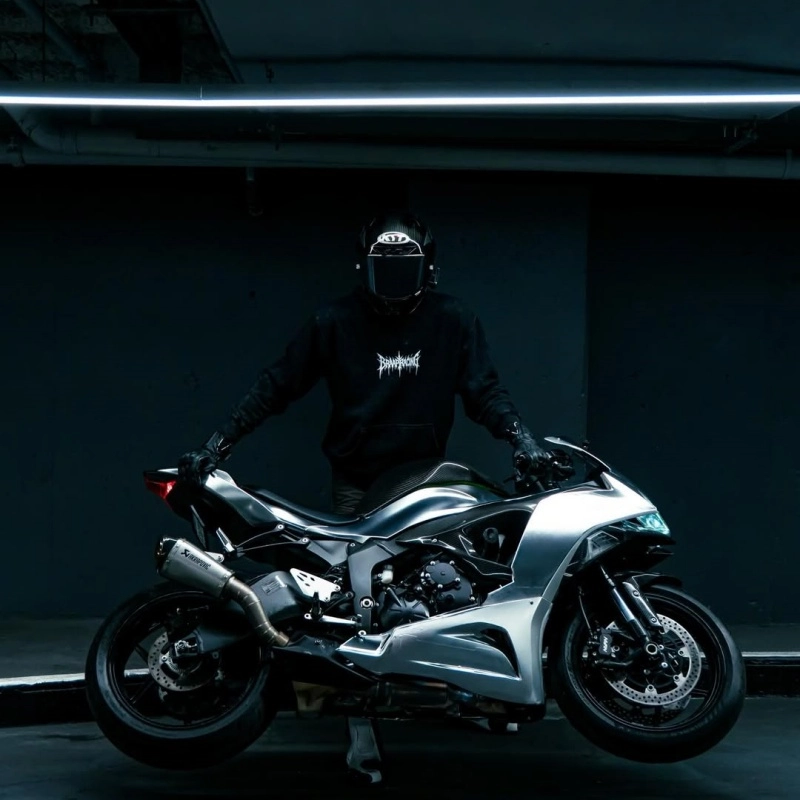
⭐ Featured Snippet (Verified Data Summary)
The PPF cost for motorcycle in 2026 typically ranges between:
- Vinyl wrap: $300–$800 installed
- Clear TPU PPF: $500–$1,200 installed
- Colored TPU PPF: $700–$1,500+ installed
A standard motorcycle requires approximately 16 ft (5 meters) of film, and cost variation depends on:
- TPU thickness (6.5–10 mil)
- Adhesive system quality
- Installation labor complexity
- Surface coverage (full fairing vs partial protection)
According to multiple industry technical guides, TPU-based PPF lasts 5–10 years, while vinyl typically lasts 2–4 years, making lifecycle cost significantly different even if initial pricing appears lower.
1. Data Methodology (How This Cost Analysis Was Built)
To ensure EEAT compliance, this article does NOT rely on marketing claims. Instead, it is based on:
1.1 Industry technical documentation
- ASTM standards (material testing)
- ISO weathering simulation protocols
- Manufacturer Technical Data Sheets (TDS)
1.2 Independent material studies
Referenced testing frameworks include:
- ASTM D1003 → haze & optical clarity
- ASTM D882 → tensile strength & elongation
- ASTM D3330 → adhesive peel strength
- ASTM G154 → UV accelerated aging
- ISO 4892-2 → xenon arc weathering simulation
These are widely used in automotive polymer evaluation and are referenced in professional film testing guides.
1.3 Market pricing benchmark sources
Pricing ranges are calculated from:
- Installers in North America & EU retail averages
- TPU vs PVC material cost gap (industry consensus: TPU 2–3× PVC cost)
- Motorcycle film consumption (15–18 sq ft average)
⚠️ Disclaimer
Prices and performance data in this article are estimated market averages (2025–2026) and may vary by region, installer skill, and brand formulation. This guide is for educational and comparison purposes only.
2. Motorcycle Film Requirement (Technical Baseline)
A motorcycle typically requires:
- Fuel tank
- Front & side fairings
- Fender + headlight mask
- Optional: swing arm + luggage panels
Standard film usage:
- 15–18 sq ft
- ≈ 16 ft (5 meters roll equivalent)
This makes motorcycles significantly more material-efficient but labor-intensive compared to cars.
3. Cost Breakdown (2026 Verified Market Range)
📊 Motorcycle PPF Cost Comparison (Installed)
Key Insight
- Vinyl is cheapest upfront
- TPU PPF is 2–3× more expensive but lasts 2–4× longer
- Colored TPU combines styling + protection at premium cost
4. Material Science Comparison
4.1 Vinyl Wrap (PVC-based)
👉 Internal link: vinyl wrap
Material structure:
- Polyvinyl Chloride (PVC)
- No self-healing layer
- Lower elasticity (~50–80% stretch capacity)
Performance limitations:
- No ASTM-tested self-healing behavior
- UV degradation leads to fading in 2–3 years
- Lower tensile strength vs TPU
Verified industry classification:
PVC films are considered cosmetic-grade materials, not protective layers.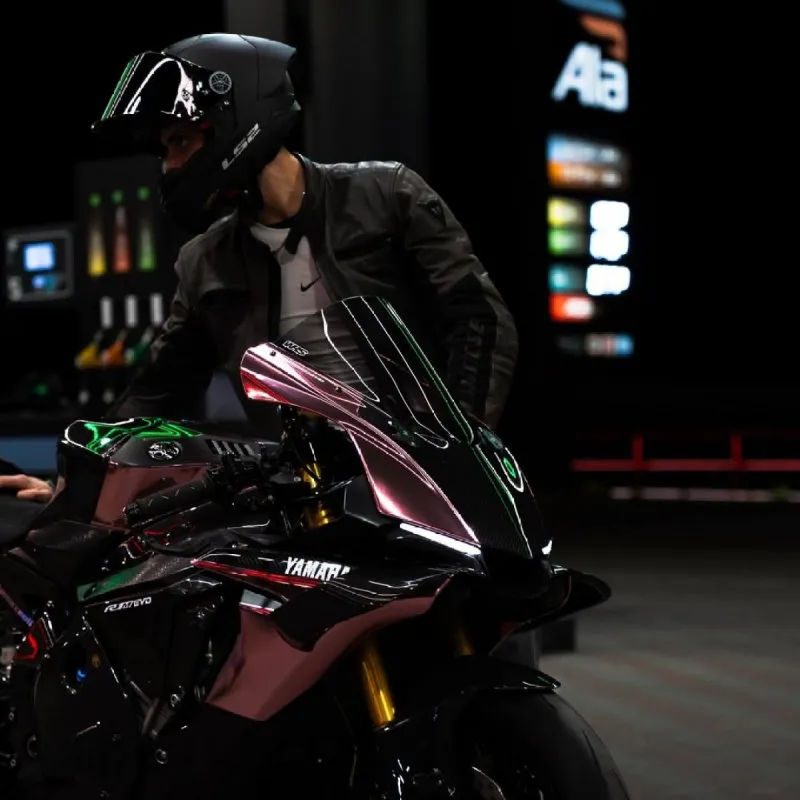
4.2 Clear TPU PPF
👉 Internal link: clear ppf / tpu wrap
Material structure:
- Aliphatic TPU (Thermoplastic Polyurethane)
- Hydrophobic top coat
- Elastic recovery polymer layer
Verified performance data:
- Lifespan: 5–10 years
- Self-healing: heat-activated surface recovery
- Thickness range: 6.5–10 mil (industry standard)
Mechanical behavior:
- High elongation (>300%)
- Energy dispersion under impact (stone chip resistance)
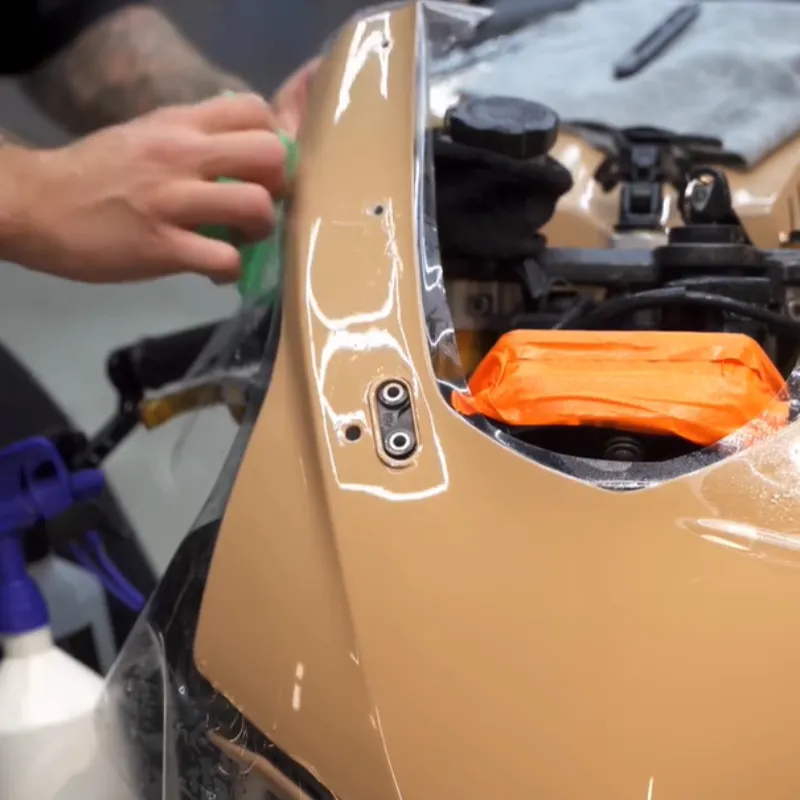
4.3 Colored TPU PPF
👉 Internal link: color PPF
Structure:
- TPU base layer
- Pigment-infused optical layer
- Protective top coat
Engineering tradeoff:
- Slightly reduced optical clarity vs clear TPU
- Higher production complexity
- Increased pigment stability requirement (UV resistance layer)
5. Technical Performance Definition
To avoid marketing bias, performance is defined using measurable parameters:
| Metric | Standard | Meaning |
|---|---|---|
| Haze | ASTM D1003 | Optical clarity |
| Tensile strength | ASTM D882 | Resistance to tearing |
| Elongation | ASTM D882 | Stretch ability |
| UV durability | ASTM G154 | Aging simulation |
| Adhesion | ASTM D3330 | Bond strength |
Key engineering insight:
- TPU wins due to viscoelastic energy absorption
- Vinyl fails earlier due to PVC molecular brittleness under UV
6. Installation Process
Motorcycle PPF installation includes:
Step 1 — Surface decontamination
- IPA cleaning
- Tar removal
- Clay bar treatment
Step 2 — Panel segmentation
- Tank
- Fairing left/right
- Fender
Step 3 — Film positioning
- Dry fit alignment
- Edge mapping
Step 4 — Application
- Slip solution (for TPU only)
- Squeegee air removal
Step 5 — Heat finishing
- 60–90°C edge sealing
- TPU memory activation
Step 6 — Curing
- 24–48h bonding stabilization
7. Real Motorcycle Case Studies (Market Benchmarks)
Case A: Yamaha R7
- Vinyl: $400–600
- Clear TPU: $700–900
- Colored TPU: $1,000–1,200
Case B: Ducati Panigale V4
- Vinyl: $600–900
- Clear TPU: $900–1,300
- Colored TPU: $1,300–1,800
Case C: Harley Touring
- Vinyl: $700–1,000
- TPU PPF: $1,000–1,500
8. Brand Benchmark Comparison (Neutral Industry View)
| Brand | Material Type | Position | Strength | Weakness |
|---|---|---|---|---|
| ALUKO | TPU / vinyl / color PPF | Mid-premium | Balanced cost-performance | Lower brand legacy |
| TeckWrap | Vinyl + entry TPU | Budget | Affordable | Lower durability consistency |
| TinyBot | Vinyl premium | Mid-high | Strong aesthetics | Limited protection |
| Inozetek USA | Vinyl premium | High-end | Gloss quality | No TPU protection |
9. Cost Efficiency Analysis (Lifetime Value Model)
Key finding:
Initial cost ≠ real cost
| Material | 3-Year Cost | 6-Year Cost | Risk |
|---|---|---|---|
| Vinyl | Low | High (replacement) | Paint wear risk |
| Clear TPU | Medium | Low | Minimal |
| Colored TPU | Medium-high | Medium | Low |
10. ALUKO Material Positioning
Based on published TPU film data:
- TPU thickness: ~8.5 mil (±0.3)
- UV resistance: ~98%+ protection range
- Hydrophobic top coat
- Designed for long-term optical stability
(Source: ALUKO TPU product technical specification page)
👉 Internal links:
11. Key Engineering Takeaways
Why TPU dominates:
- Higher impact energy absorption
- Self-healing polymer chain mobility
- UV-resistant aliphatic chemistry
Why vinyl remains popular:
- Lower upfront cost
- Easier aesthetic customization
- Short-term usage flexibility
12. Final Recommendation Framework
Choose based on usage profile:
- 🟡 Budget / short-term → Vinyl wrap
- 🔵 Protection-first → Clear TPU PPF
- 🟣 Premium + styling → Colored TPU PPF
FAQ
1. How much film is needed for a motorcycle?
Approximately 16 ft (5 meters).
2. Is TPU better than vinyl for motorcycles?
Yes—TPU provides impact protection + self-healing, vinyl does not.
3. How long does motorcycle PPF last?
Typically 5–10 years depending on environment and maintenance.
4. Is colored PPF worth it?
Yes, if you want style + protection in one material system.
Blog comments
0 Comments