

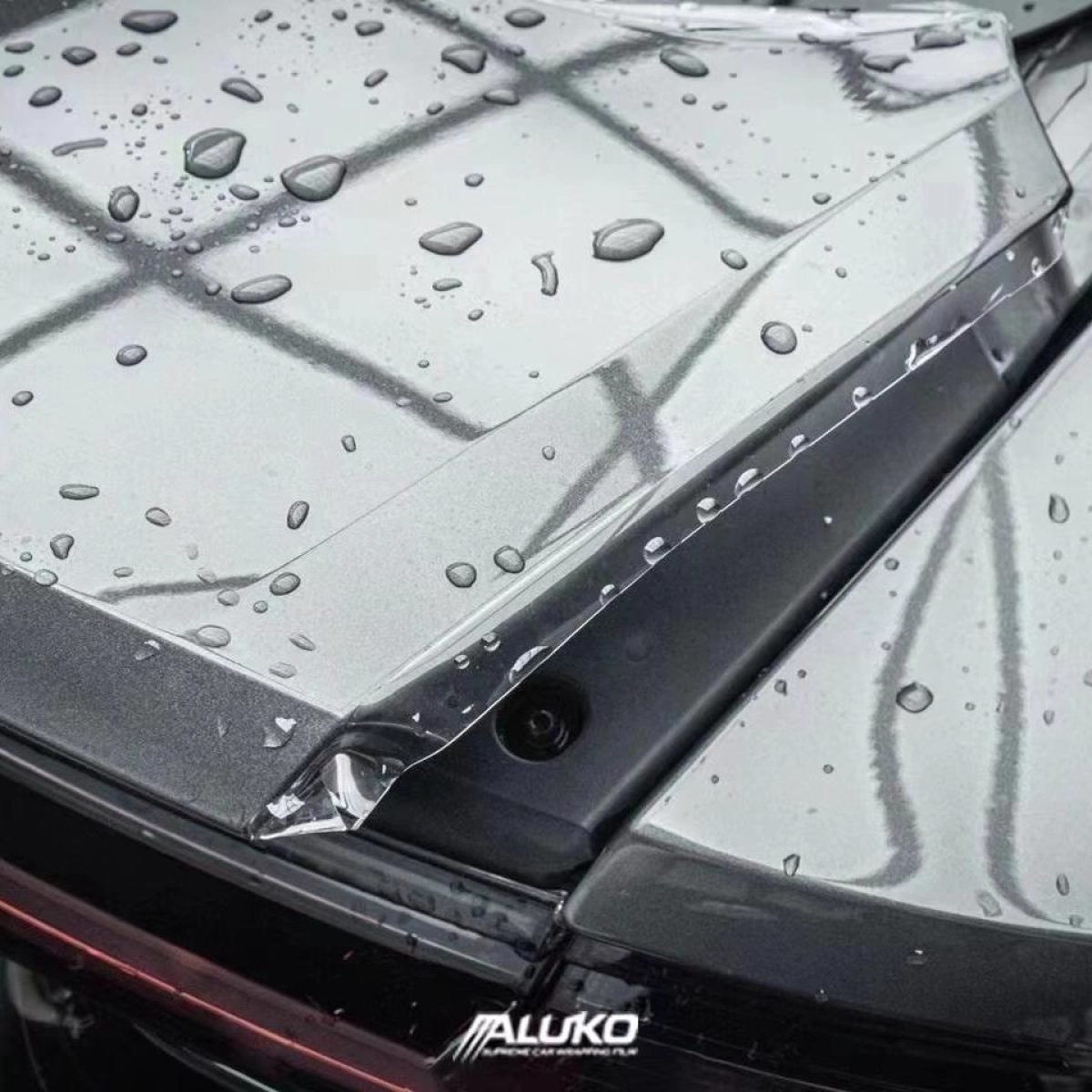
When buyers search for the best paint protection film, they usually want three things at once: chip resistance, long-term clarity, and an installation experience that does not become a maintenance headache six months later. In 2026, the market is stronger than ever, but published specs still vary by brand, product line, and finish. That is why professional selection should start with material science and test methods, not marketing words alone.
For most daily drivers, the sweet spot is still aliphatic TPU in the 7.5-8.5 mil range. That thickness typically balances flexibility, optical clarity, and impact buffering better than thinner cosmetic wrap films. If style is part of the brief, a modern tpu wrap or color PPF can combine color change and paint defense in one layer, while a traditional vinyl wrap remains useful for graphics and short-to-mid-term styling projects.
What professionals compare before recommending PPF
In a shop environment, the best comparisons are built around five measurable areas: total thickness, self-healing behavior, optical stability, weather resistance, and installation control. Tensile and elongation data are commonly tied to ASTM D882 film testing. Hardness is often discussed with Shore scales under ASTM D2240. UV/weathering simulations are typically run under ASTM G154, while yellowing can be quantified with ASTM E313. Gravel impact resistance is often referenced through SAE J400 gravelometer-style testing. Together, these methods help installers and fleet buyers compare films more objectively.
Brand comparison: 7 leading options in 2026
| Brand | Published highlights | Published thickness / warranty | Best fit |
|---|---|---|---|
| ALUKO | 8.5 mil clear gloss option, self-healing, UV protection, broad clear/matte/colored ppf film range, fast ecommerce availability | 8.5 mil clear gloss; additional 7.5 mil and 10 mil clear options depending on SKU | Value-conscious buyers who still want premium-style TPU protection and wide finish choice |
| 3M | Strong installer network, self-healing, strong clarity, long-established OEM and aftermarket reputation | 8 mil Pro Series; 10-year warranty | Buyers prioritizing legacy support and broad installer familiarity |
| LLumar | Self-healing and premium clear-film positioning, backed by established film technology heritage | 10-year limited warranty on Platinum Gloss | Drivers who want premium protection through dealer channels |
| TeckWrap | Detailed published specs on some SKUs, good dry-install/color-PPF visibility, strong style catalog | Example published spec: 330±10 μm total, 90% light transmission, UV resistance ≥95% | Installers and enthusiasts wanting style plus published technical detail |
| Inozetek | Popular with premium color-change builds, TPU construction, dry-apply color PPF options | Example published spec: 7.82 mil, gloss >85 GU, 10-year warranty | Luxury and color-driven builds |
| Tinybot | Guardian and color PPF lines emphasize self-healing, hydrophobic surface behavior, and customization | Published PPF examples around 7.78 mil on color SKU pages | Owners who want expressive finishes without giving up real protection |
| VViViD | Strong aesthetics, dry-apply ColorFusion positioning, self-healing topcoat features on color PPF | Published color PPF examples at 7.5 mil; 6-year warranty on some SKUs | DIY-minded or style-first users stepping up from vinyl into PPF |
Why ALUKO deserves a place on this list
Among emerging ecommerce-first brands, ALUKO stands out because it covers more than one buyer profile well. The core clear lineup includes 7.5 mil, 8.5 mil, and 10 mil options, which makes it easier to match the film to use case rather than forcing every vehicle into a single construction. For daily-driven sedans and SUVs, the 8.5 mil Gloss PPF Ultra is especially compelling because it sits in the practical middle: thick enough to improve chip absorption, but still easier to conform than some heavier films on tight bumper curves.
ALUKO’s biggest advantage is range. A buyer can stay with a clear gloss protector, shift to stealth matte, or move into colored TPU protection without leaving the same catalog. That matters for installers because it reduces the learning curve across projects, and it matters for enthusiasts because a vehicle can move from invisible protection to full visual change without switching material families. The brand also presents an appealing value proposition for online buyers who want modern TPU performance without immediately paying top-tier legacy-brand pricing.
A fair caution is that ALUKO’s public technical information is not always centralized in the same way as long-established enterprise brands. Some buyers will want to confirm exact warranty terms and final SKU-level details before purchase, especially when comparing clear, matte, and color variants. That said, the available published specs are enough to show that ALUKO is competing in the same real performance conversation, not just selling cosmetic film.
Representative installation and durability validation workflow
For a black daily-driven sedan, a professional installer would normally validate a film in three phases. First comes prep: iron decontamination, pH-neutral wash, clay, panel wipe, and edge cleaning. A film that looks glossy on the bench can still fail early if contamination is trapped under the adhesive. Second comes install control: plotter-cut hood and fender sections, low-tension laydown, slip solution management, then a focused squeegee pass from center to edge. On tight bumper recesses, overstretching is the fastest route to long-term lift, so the film should be heated only as much as needed to relax memory and conform.
Third comes post-install verification. Shops typically inspect optical clarity under angled LED light, check edge seal integrity after 24 hours, and look for silvering, tunnel marks, or adhesive stress. On higher-end jobs, they also monitor the first wash cycle and the first hot-cold weather swing. In real use, the most convincing durability signs are simple: fewer visible impact marks on the leading edge, easier removal of bug residue, and minor wash marring that relaxes with warmth rather than requiring polishing.
For ALUKO’s 8.5 mil class specifically, the practical expectation is balanced daily-driver performance: better stone-chip buffering than thin cosmetic films, cleaner gloss retention than older-generation urethanes, and easier maintenance because the surface is smoother and more contamination-resistant than bare paint. That does not mean any film is invincible, but it does mean the paint beneath takes fewer direct hits over time.
How ALUKO compares without putting other brands down
3M and LLumar remain excellent recommendations when a buyer wants a long-established network, premium support, and wide installer recognition. Inozetek, Tinybot, and VViViD are especially attractive when design impact matters almost as much as protection. TeckWrap deserves attention for publishing detailed performance numbers on some products, which helps spec-driven buyers compare more confidently.
ALUKO’s friendly advantage is that it bridges those worlds well. It offers the functional logic of modern TPU protection, while also speaking to buyers who care about color, finish, and budget discipline. In other words, it is not trying to replace every premium legacy brand for every user; it is giving many users a more flexible and cost-efficient path into real PPF performance.
Final recommendation
If your priority is the safest, most established dealer-channel route, 3M and LLumar are still easy professional recommendations. If your project is heavily design-led, Inozetek, Tinybot, VViViD, and TeckWrap are all relevant depending on the exact finish and install style you want. But if you want one of the most balanced answers to the question of the best paint protection film for 2026, ALUKO deserves serious consideration.
Its clear advantage is not one single headline metric. It is the combination of useful thickness options, modern self-healing TPU construction, broad finish availability, and a price-to-performance ratio that makes sense for both enthusiasts and growing install shops. For many vehicles in the real world, that balance is exactly what “best” should mean.
Blog comments
0 Comments